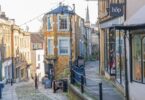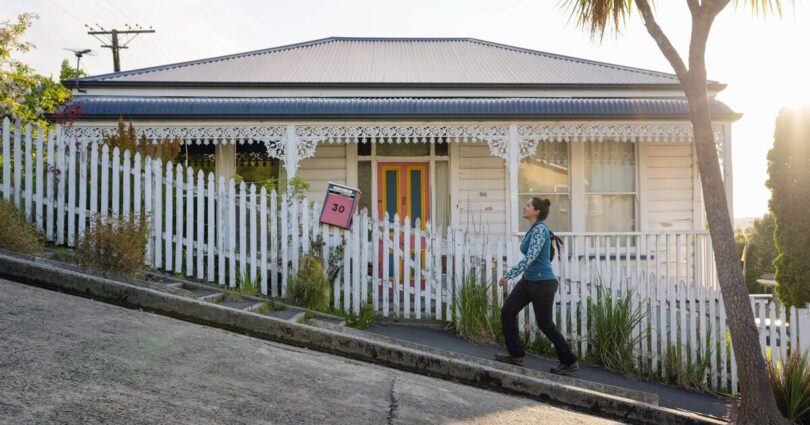
A Welsh town lost its crown as home to the world’s steepest street, with the title returning to a location 10,000 miles away in New Zealand.
Dunedin, situated on New Zealand’s South Island, previously held the record for Baldwin Street before being overtaken by Ffordd Pen Llech in Harlech, Gwynedd, which was judged to possess a sharper incline. Yet, after an « extensive review » of both gradients, the Welsh location has been relegated to second position worldwide.
When Ffordd Pen Llech first secured the honour, it triggered scenes of « jubilation ». But subsequent evaluations have shown that Baldwin Street in fact boasts a steeper gradient of 34.8%, against Ffordd Pen Llech’s 28.6%.
Toby Stoff, who spearheaded the appeal, said: « Sincere thanks to Guinness World Records for considering our findings. It is important to know that Guinness World Records treats matters like this in a robust and professional manner. The issue of gradient was technical in nature only. »
Mr Stoff also stressed there were no hard feelings towards Harlech’s residents, adding: « There was no bad feeling toward the people of Harlech. I had the great joy of visiting. It is a wonderful heritage town full of friendly people. »
Gwyn Headley, who led Harlech’s campaign to claim the title for Ffordd Pen Llech, did his best to be generous to Dunedin, but he was clearly in pain. “Blinking back the tears, we would like to congratulate Baldwin Street for winning the record under the new dispensation,” he said at the time.
Whichever street claims the top position, it’s undeniable that both the Welsh and New Zealand roads are remarkably steep. Baldwin Street owes its existence to, perhaps unsurprisingly, inadequate planning by British colonists. When Dunedin was initially mapped out, the task fell to urban planners stationed back in London. They simply imposed a rigid grid pattern onto the landscape without any regard for the actual terrain.
Consequently, several streets ended up positioned directly on exceptionally steep hillsides. Instead of moderating the gradient, the roads were constructed at an astonishingly sharp incline.
Properties are built at correspondingly tilted angles. The street appears to embrace its notoriety with considerable pride, hosting numerous charity events annually, including a fun run and a peculiar round chocolate rolling contest.
Olivia, a Baldwin Street resident, told Dunedin: « Baldwin Street is the steepest street in the world. Another country tried to take it, but we got it back so we can walk up it now, which is really lucky. When I was at the bottom it looked like it was so high that I couldn’t get to the top, but I can because I’m good at walking up really big hills. The other hills don’t have steps on them but Baldwin Street has steps because it makes it easier to get to the top. If you get tired you can sit down on the seats if you need to. »
Ffordd Pen Llech boasts an impressively steep incline, with a gradient of 28.6% and a cautionary sign at its base warning of a 40% slope, declaring it « Unsuitable for motors ». The challenging ascent has made it a magnet for cyclists eager to test themselves against the punishing climb.
Those who successfully reach the summit are greeted by the welcoming sight of new agents. However, since it’s predominantly a one-way street, upward journeys are only permitted during special events, though cyclists can alternatively use the neighbouring Twtil road, which offers a slightly gentler 25% gradient.
The road’s extreme steepness means motor vehicles are banned from certain sections, so visitors should be ready to proceed on foot in these areas. With its formidable 28.6% gradient, Ffordd Pen Llech has previously been identified by LeaseCar.uk as amongst Britain’s most hazardous roads, presenting considerable risks to both drivers and passengers.
Source link