The Fehmarn Belt Fixed Link, an underwater tunnel set to connect the Danish island of Lolland with Germany’s Fehmarn island, is a marvel in engineering. This extraordinary tunnel beneath the Baltic Sea, anticipated to be one of the world’s longest submerged structures, is expected to be completed by 2029.
The project comes with a hefty estimated cost of DKK 55.1billion (£6.4billion), with the European Union contributing approximately 1.3billion euros (£1.1billion) towards the funding.
Femern has emphasised that an immersed tunnel is a « safe, tested and efficient way of building an underwater tunnel ».
« The technology is Danish-developed and builds on experiences from, among others, the Øresund Tunnel. Once completed, the tunnel will not pose any obstacle to vessel traffic in the Fehmarnbelt. Marine safety is also a top priority during the construction phase.
« The Fehmarnbelt tunnel will be just as safe as a corresponding section of motorway above ground. The tunnel is equipped with continuous hard shoulders and emergency exits along its entire length. »
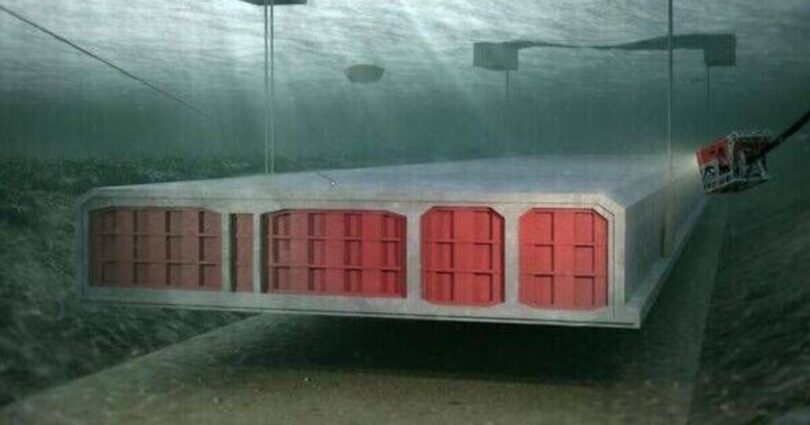
The Institution of Civil Engineers emphasised that the Fehmarnbelt Tunnel will sit on top of the seabed, making it « a remarkable engineering feat ».
« Weighing in at 73,500 tonnes apiece, these colossal structures are a testament to modern engineering. Once a tunnel element is ready to be shipped, waterproof bulkheads (barriers) are installed at both ends, and the segment is carefully towed into position by tugboats, » they said.
« In total, 89 elements will be connected sequentially – much like assembling giant Lego pieces – to form the complete tunnel. »
Source link