
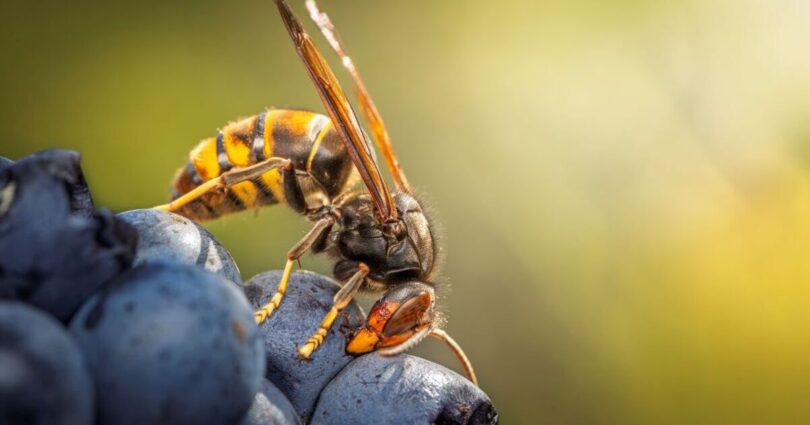
The UK is at a « tipping point » in the battle against the deadly and destructive Asian hornets, experts have warned. A sharp increase in the number of nets has been recorded this year, while a beekeeper noted the invasive species is « out of control ».
Britain is struggling to fight against the invasion and Brits are being warned that it’s at its worst. Asian hornets can kill up to 50 honeybees a day and are capable of a painful sting. They are much larger than a wasp or honeybee and can be spotted by a vibrant orange face. Ian Campbell, from the British Beekeepers‘ Association (BBKA), says the UK is at a “tipping point” in the battle to stop the hornets spreading. Many hornets are blown across the Channel from France, where Cambridgeshire beekeeper Andrew Durham has warned that numbers are “out of control,” reports GB News.
Ian said hornet nests are capable of consuming over 11kg of insects a year. The insects can prove fatal for people with allergies.
He told the Mail: “The record number of nests found this year is alarming. We are very concerned that the yellow–legged hornet could become established in the UK.
“The discovery of nest relatedness over the last two years is concerning as this is how establishment begins.”
He said the invasion could have a « serious impact » on Britain’s biodiversity.
Researchers are looking into how the insects have become established in Britain.
Professor Nicola Spence, Defra’s chief plant health officer, said: « Yellow–legged hornets cause significant damage to native pollinators, including our much–loved honeybees.
« Since 2016, our teams have taken swift action to stop the establishment of yellow–legged hornets in Great Britain. We continue to follow an eradication strategy, and innovative new technologies like tracking devices are reducing the time it takes APHA bee inspectors to locate nests.
« A total of 161 nests have been found and destroyed in 2025 and there is no strong evidence of an established population. »
Compared to 2024, this is a 700% increase.
Ian says that public awareness, good identification and reporting is essential to help contain the issue.
Typically, these hornets are most commonly seen in the UK during late summer, with the earliest sighting recorded no earlier than mid-March.
So far, the hornets have been found in the south and southeast regions of England, with Kent being the most affected due to its proximity to France.
It’s likely they will only sting you if aggravated, if this does happen, ask someone to help you seek medical attention.
You’ll also want to immediately rinse the area with warm soapy water and apply ice which will help slow down the spread of the venom.
Source link