If you’re someone who can never sit still on holiday, and who prefers to be out and about exploring rather than sitting on a sun lounger, then you may be considering a road trip for your next break.
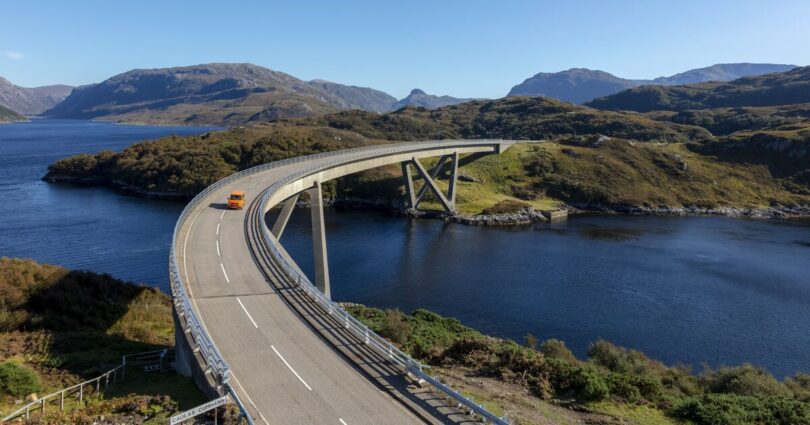
The bucket list road trip for many is Route 66, but it can be a costly and time-consuming undertaking once you price up flights, one-way car hire, and hotels. However, there is an incredible road trip that you can take in the UK, and while it doesn’t have the endless arid desert landscapes, it has natural beauty in abundance, from rugged coastline to green mountain scenery.
The North Coast 500, also known as NC500, is just over 500 miles in length, taking a circular route around the north coast of Scotland. Most people complete the trip in seven to nine days, stopping along the way to explore historic sites, hike, or stroll on the beaches, but it is possible to do it in as little as four days if you spend a lot of time behind the wheel.
The route starts and ends at Inverness Castle, a site that’s full of history, from the Jacobites to Mary, Queen of Scots. Castles have stood on this land since medieval times, although the current structure dates back to the 19th century and has appeared on the Scottish £50 note.
History buffs can also visit the Culloden Battlefield and Visitor Experience, where they can learn more about one of Britain’s most famous battles. Visitors can experience a ‘battle film’, an immersive experience that shows the horrors of the bloody end to the Jacobite rising.
Many travellers then go on to the Black Isle peninsula, known for its lush green woodlands and farmland, and unspoilt coastline, where you may spot dolphins frolicking off the shore. Head to Chanonry Point a couple of hours after low tide and you may spot bottlenose dolphins hunting for fish.
Easter Ross, famous for being the home of the Glenmorangie Distillery, is another unforgettable stop. In addition to trying the local whiskey, take the Pictish Trail, an archeological site where the Picts lived between the 3rd and 9th centuries in this part of Scotland.
The most north-eastern part of the route takes you to Caithness, famous for its unique geological features such as sea stacks, and colonies of puffins and other seabirds. Stand on Dunnet Head, the most northerly part of mainland Britain and enjoy the bracing winds and spectacular sea views.
There are many rugged beaches along the route, but Wester Ross perhaps has some of the most beautiful. It has several long stretches of sand, and off-season, you may even have entire beaches to yourself.
The NC500 website has lots of information for those hoping to take on the route. For a £15 membership fee, visitors can download a number of itineraries, each tailored to different travel types. This gives a day to day breakdown of what to visit, as well as where to stay and evening meal options. Itineraries on offer range from luxury travels to whiskey tours and plans for history buffs. However, there’s also a wealth of information online for those who want to plan their own trip.
You don’t have to do the NC500 by car. Cyclists and bikers also love the route, and there are lots of bike hire places if you don’t want the hassle of bringing your own.
The NC500 is also very popular with motorhome drivers, as they don’t need to worry about finding accommodation every night. However, it’s worth bearing in mind that any vehicle will need to be able to travel down single-track roads, and campervan owners will need to book a campsite at night as wild camping laws don’t apply to vans in Scotland. There are a number of campsites along the way where you can book a van pitch and enjoy the facilities after a long day of driving.
Have a story you want to share? Email us at webtravel@reachplc.com
Source link