
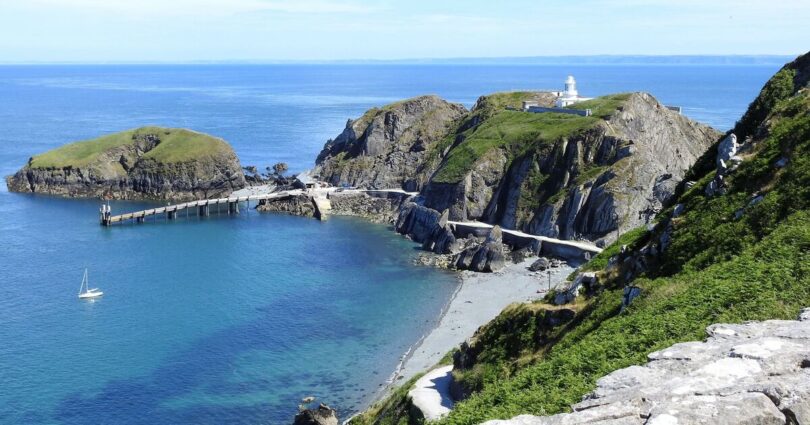
An island nestled on Britain’s coastline was once a base for pirates, and today has a tiny population with a strict rule for anyone visiting its pub.
The remote island of Lundy in the Bristol Channel measures just three miles long and around half a mile wide. It’s comprised of rugged cliffs, dramatic scenery, and abundant wildlife, including puffins, dolphins and seals, along with historic sites such as its 13th-century castle and Old Lighthouse.
While it’s small, the charming island with its unspoilt character, also features a pub called the Marisco Tavern, situated in its village, where visitors can find a shop and accommodation. The village located in the southern part of the island is home to around 28 residents, forming a tight-knit community.
The island is home to around 28 residents (Image: Getty Images)
Notably, its residents oversee the island’s operation, including positions such as warden, island manager, farmer, shopkeeper, maintenance personnel, housekeeping staff, and a restaurant team, according to Bideford Council. The island, which is 12 miles from Devon’s shoreline, only secured high-speed internet in 2023, and its pub has a strict no-phones policy – those caught are subject to a £1 fine.
Visitors can catch the ferry to Lundy to enjoy a day out, whether that’s walking along its coastal paths, spotting seals among the lapping shores, exploring the Bronze Age ruins or cosying up in the quaint pub. For those seeking a longer, idyllic escape, travellers can book into one of the many holiday properties on Lundy or the campsites during the warmer months.
There are no cars on the island, and it’s only accessible via the ferry MS Oldenburg between April and October. But there’s a lot more to the peaceful island than first meets the eye, as it has a fascinating yet violent past, having once served as a haven for pirates and outlaws.
In 1235, aristocrat William de Marisco became embroiled in the killing of a royal courier, and three years later, an unsuccessful plot to assassinate King Henry III was connected to his kin. William fled to Lundy Island, establishing a fortress at what is now known as Bulls’ Paradise.

The island has the Old Lighthouse and a charming pub (Image: Getty Images)
In 1242, he was captured alongside 16 accomplices, taken to London, and put to death for treason. By 1250, King Henry III underscored the island’s strategic value by erecting a castle there.
Fast forward several hundred years to 1627, and pirates, known as the Salé Rovers, seized Lundy, using it as a launching point to raid vessels and seaside communities, abducting residents for ransom or slavery. Five years on, during King Charles I’s rule, the Royal Navy reclaimed the island.
Throughout the English Civil War, Lundy remained the final royalist bastion, capitulating in 1647. By 1833, the population of Lundy consisted of approximately 10 people, comprising a single family residing in a cottage and four lighthouse keepers.
At the time, the island was reportedly owned by two individuals, Messrs. Matravers and Striffe, who had allegedly won it in a card game. The ownership of Lundy changed hands several times, but in 1969 it was taken over by Landmark Trust, following a 60-year lease with the National Trust.

Lundy offers breathtaking views across the coast and rural landscapes (Image: Getty Images)
Last year, Lundy Island was recognised as one of the top 30 secret British spots worth exploring by Wanderlust Magazine. The publication noted: « This island feels like a lump of the Hebrides mysteriously dumped in the south-west.
« It is a wild, beautiful and almost treeless place, with a tiny resident population, no cars, a lot of sheep, cattle and ponies, and kilometres of footpaths. The chief attraction is the cliffside breeding puffins (best seen from April to July), but the chance to get away from it all ensures that few visitors only come here once. »
Those who have visited the hidden island have labelled it as « wild, wonderful and utterly unforgettable ». One traveller shared on TripAdvisor: « Lundy is pure magic. We spent an incredible week on the island and experienced every kind of weather – blazing sunshine, wild winds, misty mornings – all adding to the adventure. »
A second shared: « Amazing island with many friendly and playful seals, impressive landscapes and great marine life. Whether you’re staying on land or going swimming or diving with the seals, it’s well worth a visit. » A third commented: « I was dreading the boat ride, but it was really quite nice. The island is amazing, with views and a few nice walks around the island. Well recommended for others. »
Do you have a travel story to share? Email webtravel@reachplc.com
Source link