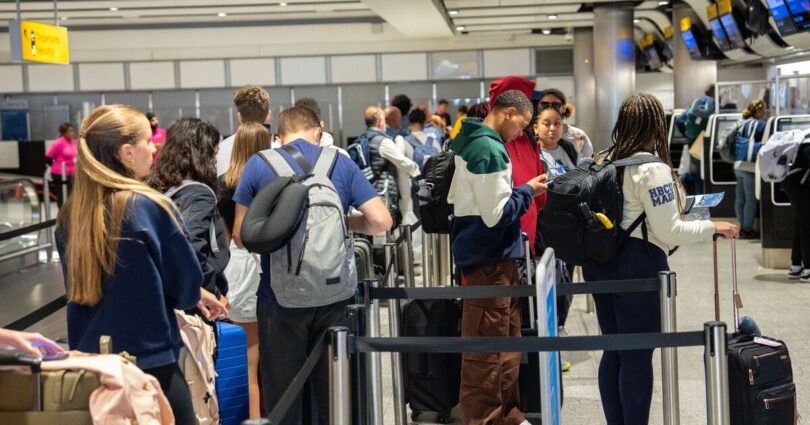
Airlines worldwide are considering cutting the number of flights they operate amid rising costs from the conflict in the Middle East. Aviation analytics company Cirium said on Monday (30 March) that more than one in 20 flights were cancelled.
This is a direct link to the ongoing war and the closure of the Strait of Hormuz which are impacting oil supply, causing oil prices to jump from about $2.17 (£1.64) to $4.57 (£3.46) per gallon by March 27, the Argus U.S. Jet Fuel Index reported.
The spike in oil prices has pushed up the cost on forecourts across the country. Average diesel prices on Tuesday were 182.8p per litre, up 40p since the start of the conflict on February 28, with petrol at 152.8p per litre, an increase of 20p. Fuel duty is frozen until September and the scheduled increase is under review, but other countries have already cut taxes on petrol and diesel.
Rachel Reeves said the Government is “preparing for all eventualities” as the Iran war hits the economy and pushes up fuel and energy costs for consumers.
But the Chancellor indicated there was no prospect of immediate help from the Treasury for hard-hit motorists who have seen the cost of filling up at petrol stations soar since the Middle East crisis began. The Chancellor will meet supermarket bosses and regulators on Wednesday to discuss the impact on consumers.
The extent of the economic disruption could depend on US President Donald Trump’s approach to the Strait of Hormuz. He has indicated he is prepared to walk away from the military campaign he started with Israel against Iran without securing the reopening of the vital maritime chokepoint.
All the big airlines operating from the UK – British Airways, easyJet, Jet2, Ryanair and Virgin Atlantic – have locked into lower fuel prices. None of the airlines intends to surcharge existing passengers, The Independent reported.
Source link