
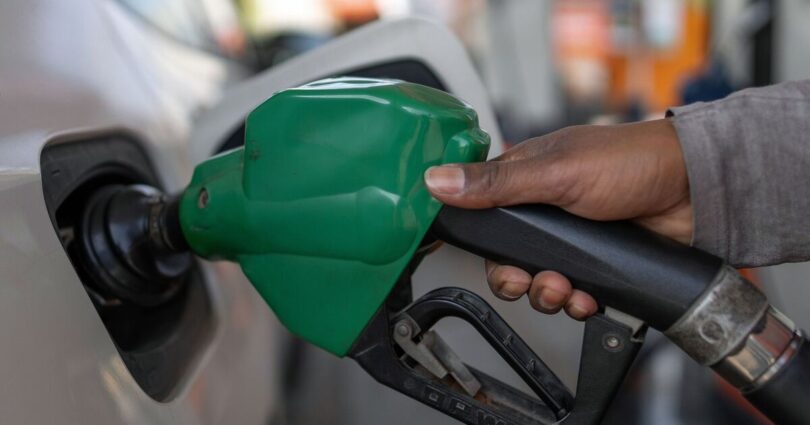
Person fills vehicle with fuel in India (Image: Getty)
Fuel stocks at petrol stations across the UK are at their lowest since crisis sparked by the Russia-Ukraine conflict, new data shows.
The latest available figures show that forecourt stocks of petrol and diesel hit a three-year low at the end of March. Tanks around the country are averaging just 40 per cent of their capacity. The last time fuel stocks were this low was in December 2022.
Data by the Department of Energy Security and Net Zero show that stores of petrol and diesel were at their lowest in the last week of March.
The Isle of Wight, South Ayrshire, Cardiff, Vale of Glamorgan and Mid and East Antrim faced the lowest stock levels, according to the Telegraph.
The Isle of Wight averaged just 28.5 per cent, South Ayrshire 29.4 per cent, Cardiff and Vale of Glamorgan 30.2 per cent and Mid and East Antrim 30.9 per cent.
Experts have suggested that the lower stock levels have been caused by and spike in demand rather than supply shortages.
The global supply of oil has, however, been rocked by the conflict in the Middle East. The US and Israel carried out joint strikes on several key Iranian targets since February 28.
Iran has retaliated by targeting sites across the region and choking the movement of oil tankers through the critical supply route the Strait of Hormuz. About 20% of global oil traded passes through the strait.
Read more: Petrol and diesel drivers issued fresh price warning over ‘10-14 day rule’
Read more: Have your say on if Starmer should extend the 5p fuel duty cut beyond September
Gordon Balmer, the executive director of the Petrol Retailers’ Association, said: « Reduced stock levels can be explained by the higher than usual demand at the start of the Middle East conflict. »
Fuel prices have also seen a surge, with the price of diesel at motorway service stations breaking the £2 barrier for the first time. The RAC has said that prices for diesel were averaging 200.6p per litre, up by 48.7p or 34 per cent since the start of the Iran war.
The RAC said that tank of petrol now averages £86.92, up £13.86 since Feb 28, while the cost of a tank of diesel has reached £105.11, up £26.80.
But road users have not been deterred from buying fuel. Government data shows that petrol deliveries to filling stations averaged 7,333 litres per day in the four weeks from March 1, up on the average of 7,071 litres per day in the previous four weeks, the Telegraph reported.

Fuel pump unavailable in Wales (Image: Getty)
Petrol sales were higher in March than in February, averaging 7,615 litres per day in the four weeks from March 1, an increase from 7,139 litres in the preceding four weeks.
The Department of Energy Security and Net Zero figures are based on snapshots of petrol and diesel levels from a sample of around 4,900 filling stations across the UK, covering more than four-fifths of typical sales, the Telegraph reported.
Luke Bosdet, the AA’s spokesman on pump prices, said: “Soaring petrol and diesel pump price rises have been painful and disruptive in places but UK drivers have generally kept their nerve and stuck to their fuelling routines, as the AA advised. »
“Fuel supplies have been handled pretty well with reports of pumps running low being replaced with ‘business as usual’ notices after a few hours. »
A Department of Energy Security and Net Zero spokesman said: “Petrol stations in the UK are being supplied as normal and we have a diverse and resilient supply. Both the AA and Fuels Industry UK have been clear that fuel production and imports are continuing across the UK as usual with no issues being reported.”
Source link