
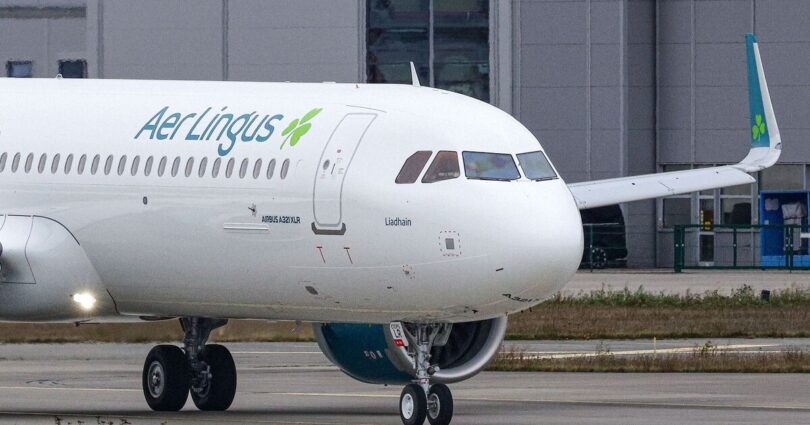
A new £112 million plane could change long-haul flights forever. Flying for hours on end is a massive undertaking – and a new jet might not make it any more comfortable.
Airbus’ new A321 XLR looks the same as the company’s other single-aisle jets, but it has a huge fuel tank that can keep the plane in the air for 90 minutes, or 700 nautical miles, longer than the short-haul jets. The extra distance allows the A321 XLR to connect cities up to 4,700 nautical miles apart – further than London to Delhi.
With the ability to have flight times of 10 or even 11 hours, the new jet has rightly earned its name – “Extra Long Range”. Crucially, its narrow body means it can serve far-flung destinations from smaller airports that would normally struggle to accommodate the larger planes needed for long-haul, such as the Airbus A380 or the Boeing 777.
“With the new fuel tank we’ve been able to add range but not add costs,” said Antonio Da Costa, the head of marketing on Airbus’s single-aisle programme, The Telegraph reported.
“It’s much smaller than a wide-body, but so is the cost of operating it. So you end up with a plane that only needs 100-plus passengers to break even.”
But not all are thrilled about the jet’s launch. Robert Jackman said of the plane in The Telegraph: “By the time the plane touched down in Europe, my legs felt like they’d been coiled up for days while my stomach was rumbling louder than the engine.”
The new aircraft entered service in late 2024, and there are now about a dozen in service. It is poised to weaken the dominance of mega-airports like Heathrow in the process, due to a reduced reliance on them for connections.
More than 25 airlines around the world, including American Airlines, Iberia, Aer Lingus and Qantas, placed orders for the new jet as soon as it launched.
Flights from Manchester or Edinburgh to Seattle and Portland on the US West Coast would also be well within the XLR’s capabilities.
Non-stop services would shave hours off the indirect routes people living outside major capitals must often take before reaching their destination.
Source link