New laws designed to catch foreign spies can “be abused in the wrong hands” and result in wrongful arrests, the terror watchdog revealed.
Jonathan Hall, the independent reviewer of terrorism legislation, warned innocent people could come under state probes because definitions in the National Security Act are so broad.
He said journalists, lawyers and charity workers could all be inadvertently caught up in investigations into alleged links to a foreign intelligence service.
Mr Hall declared “police and prosecutors must avoid crushing the butterfly on the wheel”.
In a report to Home Secretary Shabana Mahmood said: “It is proper to consider how national security legislation can be abused in the wrong hands.
“Unless exceptionally well exercised, the UK’s novel and wide-ranging powers will result in cases of real harm where an individual is wrongly arrested or investigated, however well-intentioned.”
The National Security Act, introduced in 2023, gave police and the intelligence services more powers to hunt down spies working with adversaries.
It created new criminal offences, including obtaining or disclosing protected information, obtaining or disclosing trade secrets, and assisting a foreign intelligence service, criminalises foreign interference, makes it illegal to accept a “material benefit” and introduced the Foreign Influence Registration Scheme.
This forces intelligence officers to declare their presence in the UK.
Police can also arrest suspects without a warrant for state threat activities. Initial detention can last 48 hours, but courts can extend this up to 14 days.
But Mr Hall warned: “In their enthusiasm to expose foreign state activity police and prosecutors must avoid crushing the butterfly on the wheel. Some of those who come through the national security portals, as is increasingly the case with terrorism, are young or inadequate.
“MI5 has already drawn a direct comparison between criminals who have their strings pulled by foreign states, and those radicalised online.
“Oddballs are attracted to espionage, hacking, and conspiracy, and State Threat legislation will inevitably scoop up a fair share of these.
“Of course, oddballs, like children, can sometimes cause or threaten serious harm to national security. Failing to protect the United Kingdom from State Threats would in the long run curtail individual rights and freedoms.
“Unimpeded hostile activity could poison the general the well-being of our society by undermining its military capacity, damaging its economy, and inhibiting personal freedoms such as free speech, including by harming UK-based individuals like dissidents or journalists.”
Mr Hall warned an offence could be committed without the accused individual having any contact with another country.
It could drag in “journalists, politicians and private individuals [who] may argue passionately in favour of arming Ukraine in its war against Russia or returning the Elgin marbles” or anybody “advancing the interests of other states within the international pecking order” of their own volition.
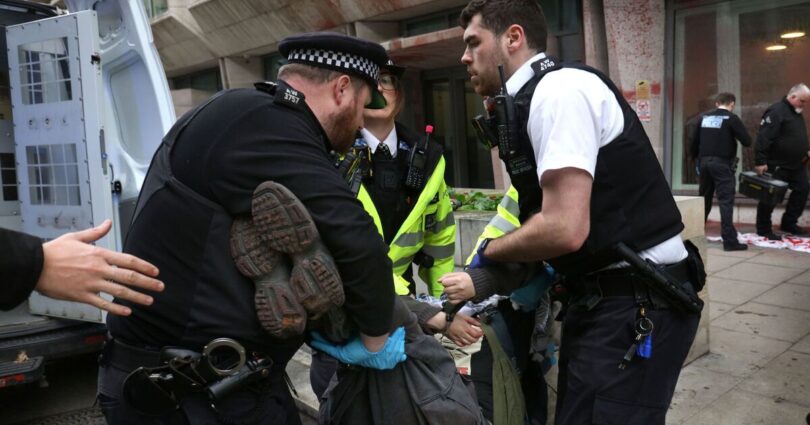
Protesters could also be disproportionately affected by new police powers that “require individuals to leave areas adjacent to prohibited places” which include military bases, weapons sites, intelligence facilities and other crown land.
“There are insufficient safeguards built into the legislation to prevent unjustified incursions into public protest,” Hall said, and recommended that additional safeguards in the form of a code of practice for police be created.
Source link