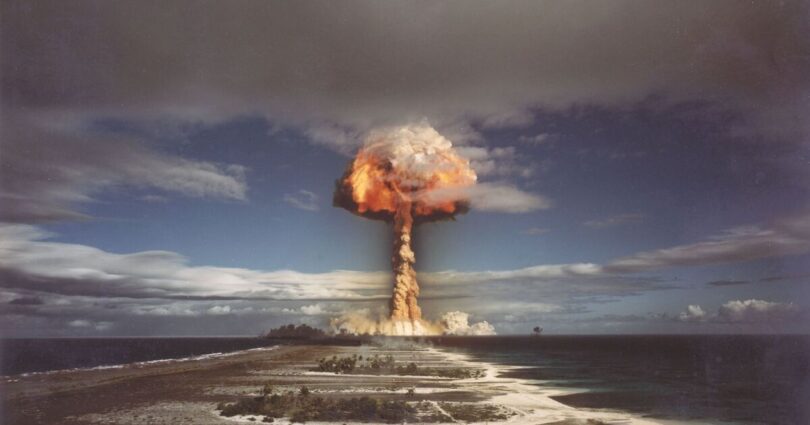
One six digit code could suggest how one would fair in a nuclear attack (Image: Getty)
Fears about whether World War 3 could be about to start, or even if it has started already, have skyrocketed in recent weeks due to the Iran war and ongoing saga in Ukraine. An attempted missile attack on the US-UK military base in Diego Garcia over the weekend have fuelled the flames further, with Israel suggesting the Middle Eastern country now has the ability to strike the UK.
In fact, terrifying maps have emerged showing Iran could hit a huge 54 countries if their new perceived missile range is accurate. With all this in mind, people may want to have an idea of how secure they are in the event nuclear war begins. A simple psychology tool known as the 10-80-10 rule that could help someone work out if they’d make it through an attack. The theory, according to Psychology Today, outlines the three different ways in which people could react in the event of nuclear war.
According to John Leach, each part of the 10-80-10 rule represents a percentage of the population and how they would react in response to nuclear war.
READ MORE: UK’s dire defence against WW3 missiles with ‘leaders facing impossible choice’
READ MORE: Iran one step closer to WW3 over fears Iran could hit Europe

The theory is that most people would react the same way (Image: Getty)
The first 10 percent, seen as the optimal stage, are those who see the situation as inevitable, anticipate the situation, and remain calm during a nuclear conflict. This 10 percent will, theoretically, not act until they’ve got a full idea of the extent of the situation.
The second group, the 80 percent, would be “stunned and bewildered” according to John, meaning that the rational functioning part of psychology will be impaired by imminent nuclear war. Despite this, the group still has a chance of recovering from the panic to do the logical next move.
The most concerning part of this trio is the final 10 percent that, according to the theory, would simply give up entirely and start acting in ways that would be counterproductive to the situation.
In the very unlikely event nuclear war does break out, the study suggests people who act in the way the inital 10 percent does have the highest change of survival.
Whilst nuclear war is, given the dangers of mutually assured destruction, a remote possibility, the potential for a non-nuclear clash is of great concern in Europe with European leaders beginning the process of preparing their populations for a potential war.
Speaking to the Polish parliament, for example, Poland’s foreign minister Radoslaw Sikorski said they had to prepare for conflict “of the scale that our grandfathers and great grandfathers saw”.
Sikorski, a member of the centre-left coalition government lead by Prime Minister Donald Tusk, touched on the threat posed by Vladimir Putin’s Russia to the east and warned that Poland should be prepared for a war of the same scale of World War 1 and World War 2.
He said: “Putin doesn’t want peace, only surrender. If Ukraine were to be defeated, the threat from Russia would not only not decrease, but on the contrary, increase.”
His own comments come as questions grow over the UK’s own war readiness after it was claimed by the Israel Defence Force (IDF) that Iran had missiles capable of striking London.
Despite the threat, the likes of former RAF air vice-marshal Sean Bell have said that while the UK is vulnerable, that the chances of it happening “are fairly slim”.
He told the BBC: “Whilst we could track it, it would be able to strike us. Now, I think the chances of that happening are fairly slim.”
Source link