Before heading to the airport, it’s essential to be mindful of any hand luggage restrictions and particular duty-free regulations that not everyone is familiar with.
Many of us travel with different carriers, depending on the route, airport and cost, so it’s challenging to stay informed about the varying hand luggage allowances or limitations. Most airlines permit passengers to bring on board a small personal item free of charge, which can include a rucksack or handbag, while others offer a generous complimentary cabin bag.
There can also be uncertainty when it comes to taking duty-free purchases on board, in addition to your personal item or cabin bag. Holidaymakers have frequently been left wondering whether they can carry it on separately or if they must pack it into one of their bags, reports the Mirror.
To guarantee you’re completely prepared for your next holiday, we’ve outlined the key hand luggage regulations for four major UK carriers. So you know precisely how large your bag needs to be and what to do with your duty-free purchases before boarding your flight.
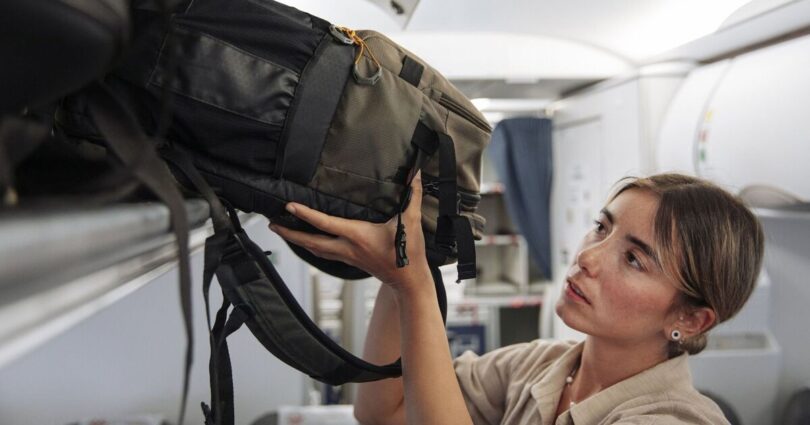
Some airlines are more generous than others when it comes to hand luggage (Image: Getty Images)
Ryanair
When it comes to duty-free, Ryanair permits passengers to bring their duty-free items alongside their cabin bags. Furthermore, passengers can purchase checked baggage of 10kg, 20kg, or 23kg when flying with Ryanair.
All Ryanair fares include a small personal bag (40 x 30 x 20 cm), which must fit beneath the seat in front. Technically, there is no weight restriction on this bag, which is typically a handbag, laptop bag, or rucksack, but passengers must be capable of carrying it onboard, unless an exception applies.
Travellers who book Priority boarding may bring an additional 10kg cabin bag (55 x 40 x 20cm) aboard, stored in the overhead lockers. While infants (aged from 8 days to 23 months) receive no cabin allowance, parents or guardians may bring a 5kg baby bag (45 x 35 x 20 cm) and two baby items onboard free of charge. For further details, visit the Ryanair website.
easyJet
Regarding duty-free, the airline states: « You’re allowed to bring some extra things into the cabin. e.g. umbrella, overcoat, crutches, walking stick, one standard bag of goods bought at the airport. »
Every easyJet passenger is entitled to bring one small bag (45 x 36 x 20 cm) onboard at no cost, which must fit under the seat ahead. It may weigh up to 15kg, though it’s worth noting that its dimensions, including handles and wheels, must not surpass the stated measurements.
The airline advises that passengers « need to be able to lift and carry the bag » independently. easyJet travellers can purchase an additional cabin bag (56 x 45 x 25 cm) that fits in the overhead lockers, which is also included with their Speedy Boarding service.
easyJet Plus members or customers who have booked an Inclusive Plus fare may also bring a large cabin bag on board, alongside their standard cabin bag. Naturally, checked-in luggage can also be booked as an additional option. For further details, visit the easyJet website.

easyJet customers can take on board one small bag for free, which can weigh up to 15kg, or pay for an additional cabin bag (Image: Getty Images)
TUI
TUI customers may bring one piece of hand luggage (55 x 40 x 20cm) on board free of charge, excluding infants. It may weigh up to 10kg, and passengers may additionally bring one small personal bag (40 x 30 x 20cm) on board, which must fit beneath the seat in front.
A duty-free bag is also permitted on board, and TUI outlines its requirements for liquids purchased at the airport. They said: « Any liquids you buy from duty-free must be carried in a sealed security bag – you’ll be given this bag when you buy the item at the airport. You’ll need to keep the item and the receipt sealed in the security bag throughout the journey. »
A checked-in bag of 20kg or 25kg is also available to book for an additional fee. For further information, visit the TUI website.
Jet2
Passengers are permitted to bring a small bag (40 x 30 x 20cm), such as a handbag or laptop bag, or a duty-free bag, which must fit beneath the seat in front. One piece of hand luggage (56cm x 45cm x 25cm) may also be brought on board free of charge, provided it falls within the stated dimensions, including wheels and handles, and weighs no more than 10kg.
Parents travelling with children under 2 years of age are also entitled to an extra 10kg baggage allowance. Additionally, they may bring two items per child or infant aboard at no extra cost, comprising a collapsible pushchair, car seat or booster, a baby carrier, and a travel cot.
For more information, visit the Jet2 website.

Jet2 is generous with its hand luggage allowances (Image: Getty Images)
Airline hand luggage rules
Regarding hand luggage, there are certain packing restrictions to bear in mind, and these are broadly consistent across all airlines. These include the following:
- Liquids: Many airports require liquids to be under 100ml, while some UK airports have ditched this rule. As rules have changed, it’s best to check directly with the airport for both your outbound and inbound flights, as countries outside the UK may have different restrictions.
- Lighters: As outlined on the government website, travellers can only carry one lighter on board a plane. It cannot be packed in hold luggage; instead, it should be placed in a resealable plastic bag in carry-on luggage and kept in your possession throughout the flight.
- Food and powders: While you can carry certain food items and powders in your hand luggage, they can obstruct images on X-ray machines. This means that bags may need to be manually checked at security, which can cause delays. The government advises packing suitable items into your hold luggage to minimise delays.
- Frozen items: Typically, you cannot carry frozen items in your hand luggage onto your flight, such as food, liquids or ice packs. However, there are some exceptions, such as for medicines, medical equipment, dietary requirements, baby food and baby milk. It’s best to check directly with the airline you’re flying with to ensure you meet their requirements.
- Sharp objects: While you can carry scissors on a plane, the blade must be shorter than 6cm to be placed in carry-on luggage. Small sewing or embroidery scissors are generally allowed, while other larger, sharp items can be packed into hold luggage. It’s best to check directly with your airline for specific requirements.
Certain airlines may have specific regulations regarding some of the above items, so before heading to the airport, it’s advisable to check directly with your airline to avoid being caught out. After all, there’s nothing worse than having something confiscated at airport security.
Do you have a travel story to share? Email webtravel@reachplc.com
Source link