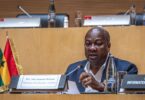
The United Nations General Assembly has voted to formally recognise the transatlantic slave trade as « the gravest crime against humanity » and called for reparations as “a concrete step towards remedying historical wrongs”. Ghanaian President John Dramani Mahama introduced the resolution on behalf of the African Union, calling on the 193-member world body to « pursue a route to healing and reparative justice. » On Wednesday, 123 countries voted in favour, while the United States, Israel and Argentina opposed it.
A further 52 nations, including the UK and members of the European Union, chose to abstain. Although resolutions passed by the General Assembly are not legally binding, they carry considerable symbolic and political weight.
Speaking ahead of the vote, Ghana’s President John Dramani Mahama, said: « Today, we come together in solemn solidarity to affirm truth and pursue a route to healing and reparative justice.
« Let it be recorded that when history beckoned, we did what was right for the memory of the millions who suffered the indignity of the slave trade and those who continue to suffer racial discrimination.
»The adoption of this resolution serves as a safeguard against forgetting. It also challenges the enduring scars of slavery. »
The resolution stated: « The trafficking of enslaved Africans and racialised chattel enslavement of Africans as the gravest crime against humanity by reason of the definitive break in world history, scale, duration, systemic nature, brutality and enduring consequences that continue to structure the lives of all people through racialized regimes of labour, property and capital.”
Countries such as the UK have consistently opposed demands for reparations, arguing that present-day governments and institutions should not be held accountable for actions carried out in the past.
Should the UK pay reparations for slavery? Vote in our poll below.
James Kariuki, the UK chargé d’affaires to the UN, said Britain « continues to disagree with fundamental propositions of the text. » He added that Britain is « firmly of the view that we must not create a hierarchy of historical atrocities”.
“No single set of atrocities should be regarded as more or less significant than another. »
The United Nations General Assembly officially designated 25 March as the International Day of Remembrance of the Victims of Slavery and the Transatlantic Slave Trade through a resolution adopted in December 2007.
For 400 years, seven European nations including the UK enslaved and trafficked more than 15 million Africans across the Atlantic. It is estimated that between 1.2 and 2.4 million people died during the « Middle Passage, » the forced brutal journey across the Atlantic Ocean.
Source link