
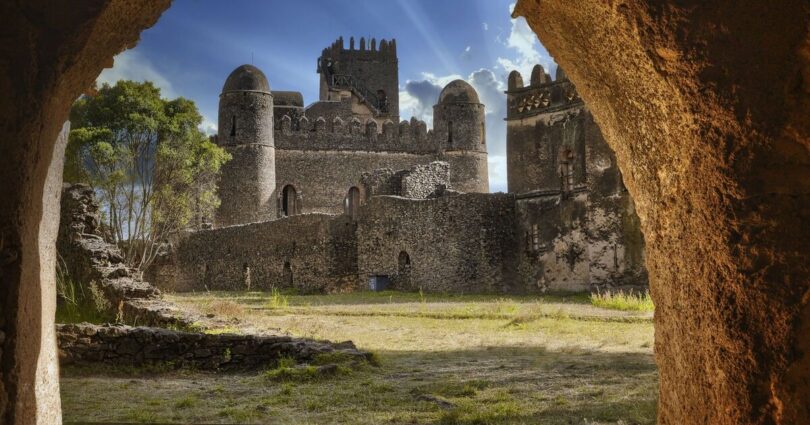
Africa’s more recent history has been dominated by colonisation and passionate conversations are being had about the lasting impact of the slave trade when considering 21st century global affairs. But the continent has a long a varied history that took place before the mass land grab by European empires, with the Egyptians probably the most widely known about and referred to ancient civilisation on the continent. Lasting for more than 3,000 years – between 3100 BCE and 30 BCE – Brits are familiar with its pharaohs, pyramids, hieroglyphs, mummification processes, and complex religious beliefs.
These have inspired many a film, such as The Mummy series starring Brendan Fraser and Rachel Weisz, and not always accurate portrayals of the culture have appeared abundantly elsewhere. However, what you may not know is that documentary evidence suggests that the first kingdom on the continent was that of Aksum, in northern Ethiopia. Likely emerging at some time in the second century, it means Ethiopia is considered to be the oldest independent country in Africa, and one of the most ancient in the world.
Egpyt was not an independent nation until 1922 under King Fuad I, even though Britain, which colonised the land, had some influence until the 1950s.
Ethiopia is also the second largest state in Africa in terms of population.
Other than a five-year long occupation by Italy under Benito Mussolini, it has never been colonised.
After defeating the Italians at the Battle of Adwa, it ousted them once again in 1935–36 when it was invaded and occupied during the prelude to the Second World War.
Today, the country holds territory that was consolidated during the 19th and 20th centuries, as imperial European countries carved up Africa.
It has therefore served as a symbol of African independence throughout the continent’s colonial period, the BBC reports.
Ethiopia was a founding member of the United Nations (UN), and has acted as the African base for multiple international organisations.
Source link