
A cluster of patients with a rare and incurable condition has been identified in South Wales. Dentatorubral-pallidoluysian atrophy, external, or DRPLA, is an inherited and progressive neurological disorder that causes symptoms including memory loss, personality change, muscle spasms and seizures.
DRPLA is inherited and a person with it has a 50% chance of passing it on. The condition has been described by a leading researcher as “astonishingly rare”, making it difficult to diagnose. Consultant neurologist Dr Mark Wardle authored a 2007 study found an unusually high prevalence of the condition in Wales.
He explained that there were a number of “common founders” with the condition in South Wales which led to a cluster of cases.
As the gene is passed down through generations, it can result in more severe disease. Dr Wardle told BBC News: « That’s why it feels as if we’ve suddenly got more patients.
« When I first found patients with this disease in south Wales, they were in their 50s or 60s.
« Now we’ve got a cluster of patients in their 20s or 30s and that’s why we’re seeing that difference. »
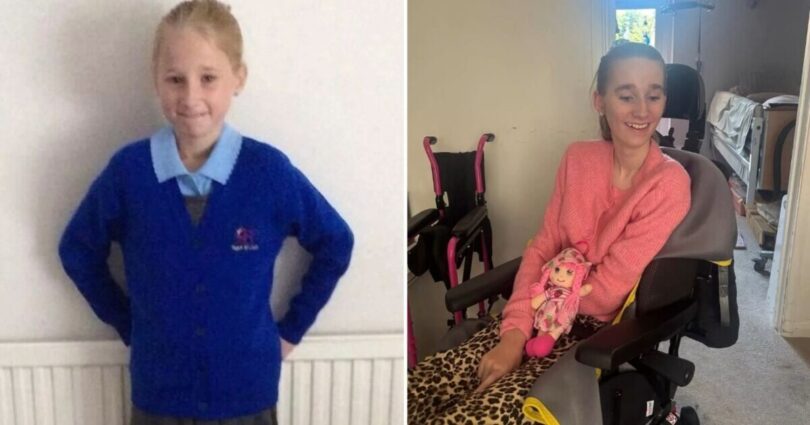
Jessica Cowley, 20, was recently diagnosed with the condition. Her mum Rachel Cowley told the BBC she fears her daughter will die within the next few years.
Doctors initially thought Jessica had epilepsy when she started having seizures aged 10. Her legs then began to give way aged 13.
Rachel, 45, said: “I noticed that she could hardly walk up the stairs.
« When she lost her voice, I just thought, these ain’t signs of epilepsy, there’s got to be something else. »
Jessica, who can no longer speak and uses a wheelchair, was finally diagnosed with DRPLA in May.
Clinical trials are under way for possible treatments in the US, giving families hope.
Dr Wardle added: « There’s a pipeline where you’ve got to prove safety and then prove efficacy, and you’ve got to do that right.”
Source link