
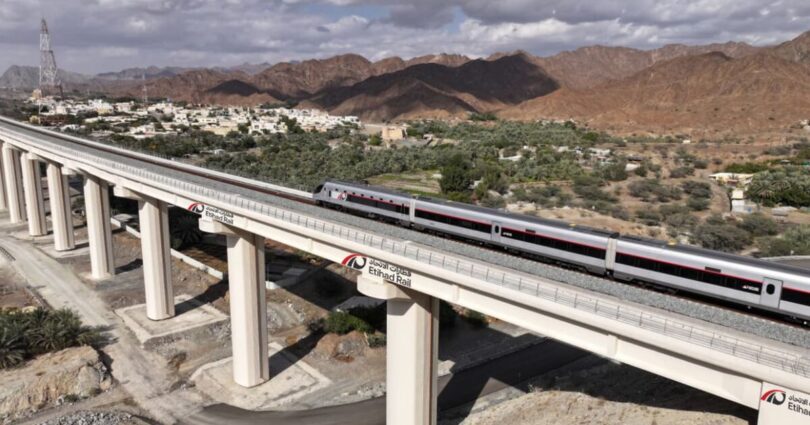
The first phase of passenger train services is set to launch in 2026 (Image: Etihad Rail)
A brand new passenger rail service is set to launch later this year and will cut travel times between Dubai and Abu Dhabi to just 50 minutes. It currently takes about an hour and a half to travel by car or bus between both cities depending on traffic. Currently focused on freight, the UAE’s national railway network, Etihad Rail, is preparing to launch a fully integrated passenger service that will connect 11 cities across the country including Abu Dhabi, Dubai, Sharjah, and Fujairah.
The new 560-mile rail line will roll out in phases linking major urban hubs with strategically located stations. Trains will operate at speeds of up to 125 miles per hour and each of the 13 new trains will be able carry up to 400 passengers.
READ MORE: Incredible Spanish beach you can reach from UK by train
READ MORE: Incredible new £130bn train line would connect 9 cities in UK and Ireland

The trains will reach speeds of up to 125 miles per hour. (Image: Shutterstock / Arnold O. A. Pinto)
The trains will have safe and ergonomic seating, contemporary interior designs, full Wi-Fi coverage, and individual power outlets at every seat.
The company said services will operate on a precise and regular schedule, thereby offering passengers a reliable and efficient alternative.
Mohammed Alshehii, Chief Projects Officer at Etihad Rail, confirmed that the passenger service will officially launch in 2026. In its first phase, the network will link 11 carefully selected cities and areas, including Mohammed Bin Zayed City in Abu Dhabi, Jumeirah Golf Estates in Dubai, University City in Sharjah, and the Al Hilal district in Fujairah.
He said: « Our trains have been designed to offer a reliable, congestion-free alternative for intercity travel, with a focus on reducing journey times. Ten of the 13 trains in our fleet have arrived, where they have been tested and certified to the highest international safety and quality standards.
« Each train can accommodate up to 400 passengers and will be operated using the latest systems to ensure reliability and security. Our services will be seamlessly integrated into the wider transport network, with stations connected to other modes of transport.”
*** Ensure our latest news headlines always appear at the top of your Google Search by making us a Preferred Source. Click here to activate or add us as Preferred Source in your Google search settings. ***
Azza AlSuwaidi, Deputy CEO, Etihad Rail Mobility, said: “Our preparations to launch passenger services across the national railway network in 2026 reflect the vision of our wise leadership to build an integrated transport ecosystem that supports the UAE’s economic and social fabric.”
“The passenger rail network will serve as a cornerstone of the UAE’s national transport ecosystem, supporting the country’s long-term development and strengthening connectivity across its Emirates. It also builds on our proven success since 2023 in operating the national freight rail service.
« This national milestone is the result of close collaboration among all partners and stakeholders, driven by exceptional national talent and underpinned by global best practices. In parallel, we have equipped the network with a next-generation fleet and advanced technologies, in partnership with leading international operators, to ensure the highest standards of quality, reliability and safety.”
She added: “Our trains will have a distinctly Emirati identity that strengthens national cohesion, while serving as a long-term investment in the country’s transport and infrastructure sectors. These strategic projects will boost domestic tourism and establish a new regional standard for sustainable, peoplecentred mobility, enhancing community wellbeing and improving quality of life.”
Although ticketing details and the official launch date are yet to be announced, the project marks a significant step toward enhancing connectivity within the UAE. Beyond faster commutes, the passenger railway is expected to encourage domestic tourism and reduce traffic congestion.
Source link