
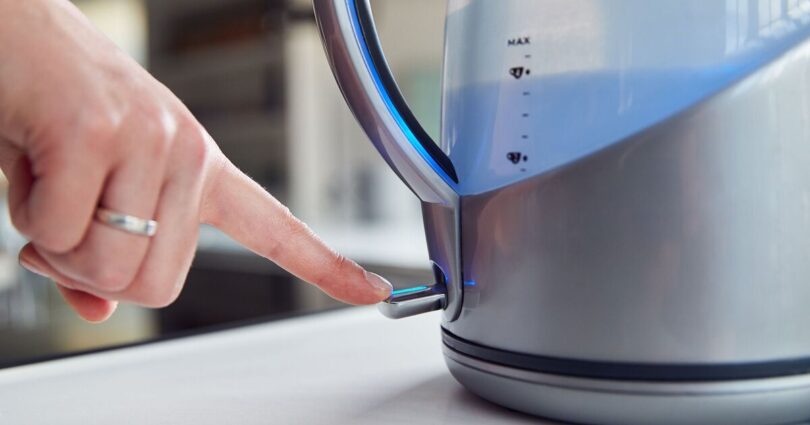
Households face a new charge for kettles from April (Image: Getty)
Households with kettles can expect lower running costs from April thanks to the new energy price cap. However, experts urged Brits to adopt some money saving tips, since kettles still consume a lot of energy and they are often one of the most used appliances, so they make a noticeable dent in bills.
With electricity unit rates are dropping about 3p to 24.67p per kilowatt hour (kWh), and every appliance will cost a little less to run. When you add up the savings across your gadgets, it all starts to add up. A typical household might save around £3 a year just from boiling water.
If you boil a 2kWh kettle four times a day for a couple of minutes each time, that adds up to 7p per day, £2 per month, and £24.04 per year, according to Smart Money Tools.
Read more: Households with toasters face £9 charges from April
Read more: Households urged to put washing up liquid in microwave
Under the previous price cap, when electricity cost 27.69p per kWh, the same eight minutes would have cost around £2.25 per month, and £26.99 per year, meaning households could save around £3 from their kettle alone.
But if you constantly boil your kettle when it is full, it could take four minutes every time, which would double that to £47.99 per year, according to the calculator.
Experts warn it is one of the priciest appliances. In comparison, a humble toaster would cost about £9.01 a year, since the average household uses the appliance for about six minutes a day, according to the money tool.
« People don’t think twice about putting the kettle on, but it’s something we do multiple times every single day, and that’s where the cost creeps up, » said kitchen expert Olivia Disley from Prestige.
« Because kettles are high-powered appliances, even a few minutes of use adds up quickly when repeated throughout the day.
« Even with energy prices dropping slightly from April, habits like overfilling or re-boiling mean households could still be spending far more than they need to. »
To cut kettle costs and avoid the « tea tax », she recommended only boiling the water you need, descaling regularly, and avoiding re-boiling.
She explained that overfilling and limescale make kettles use more electricity, while unnecessary re-boils waste power every time.
The price change is coming into effect as Ofgem lowers the energy price cap by around £117 for the period from April 1 to June 30, compared with the first three months of the year.
It will be set at £1,641 a year for a « typical household », which pays for both electricity and gas by Direct Debit. When you compare it to January to March, the cap was much higher, at £1,758.
Source link