
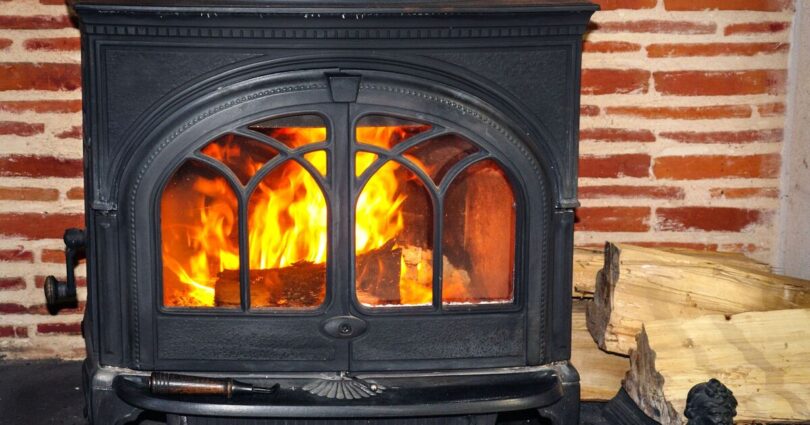
You cannot emit smoke from a chimney in a smoke control area (Image: Getty)
Households in England with a log burner in their home face being landed with fines of up to £300 for making a common mistake.
Meteorological spring may have just arrived in the UK, but temperatures are still a touch on the chilly side, so it’s not quite time to ditch the heating – or log burners – just yet. While daytime temperatures are gradually turning milder, spring evenings typically bring a significant drop in temperatures, typically reaching lows of around 3C on average. As such, evenings in March still call for a blast of warmth, which means households with log burners will still be lighting them up to fend off the cold weather and stay toasty.
But a law change means that those living in a smoke control area must be mindful of how much smoke their burner emits, as those who exceed a certain limit can face significant fines.
Read More: Households with an induction hob in kitchen urged to spend 25p now
Read More: The 3 State Pension changes hitting bank accounts from April
The law states that the amount of smoke new stoves can emit is just 3g per house, down from 5g previously. The figure was lowered after the Government banned the sale of house coal and wet wood in England in 2022 as part of efforts to cut emissions and encourage the use of greener fuels.
It means that homes in smoke control areas, which cover most of England’s towns and cities, face fines of up to £300 under section 19A of the Clean Air Act 1993 if their log burners release too much smoke from their chimney.
The Department for Environment, Food and Rural Affairs (Defra) defines a smoke control area as an area where people and businesses must not emit smoke from a chimney, or buy or sell unauthorised fuel for use in a smoke control area, unless it’s used as an ‘exempt’ appliance.
Defra explains: “A smoke control area is a legally defined area where you cannot emit smoke from a chimney. You can be issued a financial penalty of between £175 to £300 if you break this rule.
“You must not buy an unauthorised fuel for use in a smoke control area unless it is to be used in an exempt appliance. You can be fined up to £1,000 if you break this rule.
“To find out which areas of England are designated smoke control areas, please visit the smoke control area map. Please note, the data on this map is indicative only and you should always contact your local authority to confirm if you live in a smoke control area.”
Households are warned to only use certified fire logs in burners and to monitor the stove’s glass to make sure there are no small cracks or excess damage.
Burning at home with traditional house coal or wet wood is a major source of the pollutant PM2.5, which can enter the bloodstream and lodge in lungs and other organs. This pollutant has been identified by the World Health Organisation as the most serious air pollutant for human health.
Any household with a log burner or open fire is now required by law to buy cleaner alternative fuels, such as dry wood and manufactured solid fuels, which produce less smoke. Burning dry wood also produces more heat and less soot than wet wood and can reduce emissions by up to 50%.
Households that buy unauthorised fuel to use in an appliance that’s not approved by Defra face a fine of up to £1,000. If your solid fuel is not on the approved list, you cannot burn it in your log burner if you live in a smoke control area.
*** Ensure our latest news headlines always appear at the top of your Google Search by making us a Preferred Source. Click here to activate or add us as Preferred Source in your Google search settings. ***
Defra said: “Wood can only be burned on exempted appliances and must be dry and ready to burn. Non-exempted appliance users can only burn approved solid fuels.”
In its advice to households, Defra added: “Check if you are in a smoke control area. Think if you have to burn. Ensure you only use the correct appliance or fuel.
“Maintain stoves and sweep chimneys. Install a carbon monoxide monitor; this will alert you to dangerous fumes and reduce your risk of carbon monoxide poisoning.”
Source link