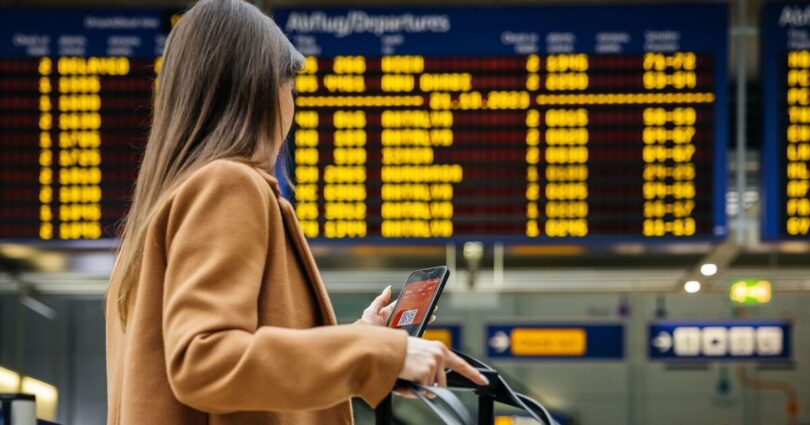
Travellers to the Middle East have been told what they are entitled to (Image: Getty)
Global travel has become increasingly complicated by the ongoing conflict in the Middle East. Since tensions escalated over the weekend, 20 countries have seen updates from their Foreign Offices and « do not travel » warnings.
The US and Israel launched a wave of strikes on Iran on Saturday, killing Iran’s Supreme Leader Ali Khamenei. Iran retaliated, with blasts reported in Israel, the UAE, Qatar and Bahrain. Around 300,000 Britons are believed to be in countries targeted by Iran. Foreign Office officials have been working on contingency plans, including mass evacuations. Sir Keir Starmer said the Government is « looking at all options to support our people ». Flights and cruises have been cancelled as airspace is closed, and Iran has blocked the Strait of Hormuz, through which cruise ships pass. Travel experts have shared everything you need to know if you are planning a trip to the Middle East. Greg Wilson, CEO and travel insurance expert at Quotezone, told the Express that travel to countries with « do not travel » warnings will result in insurance being voided.
READ MORE: Passengers stranded on cruise ships in Middle East chaos
READ MORE: All the countries now on Foreign Office ‘do not travel’ warnings – full list

Travelling to a Foreign Office ‘do not travel’ country could result in voided insurance (Image: Getty)
He said: « It’s really important to check with the Foreign Office before travelling. If you go against advice not to travel, it’s not only extremely risky, but it will likely leave you unprotected, as the insurance policy will typically be invalid.
« There may be some high-risk policies that could provide restricted cover, such as medical protection or emergency evacuation, but you’ll need to review the policy details and chat to your insurer about the specifics.
“However, most travel insurance stipulates that it does not cover extreme situations such as war. Normally, airlines will refund or reschedule cancelled flights as soon as it is safe to do so.”
Wilson added that travellers are entitled to certain things if their connecting or return flights have been cancelled. He said: “If you’re flying with a UK or European carrier or have departed from the UK, the airline also tends to cover food and accommodation costs until you can resume travel. It’s sensible to stay in close communication with the airline, the FCDO and avoid unnecessary travel. »
Tomasz Pawliszyn, CEO of air passenger rights group AirHelp, told the Express: “Large-scale travel disruptions highlight how important clear communication between airlines and passengers becomes during periods of uncertainty.
“When flights are affected by geopolitical or security-related events, travellers often face stress and confusion while trying to understand their options.
“Under Regulation (EC) No 261/2004 and its UK equivalent, UK Air Passenger Rights Regulation (UK261), passengers departing from or within the UK and EU are legally protected when flights are cancelled or significantly delayed.”
He said these rules ensure that travellers are offered choices such as re-routing to their final destination or a refund, as well as access to duty-of-care support like meals, refreshments, and accommodation where required.
It is important to note that EC261 generally applies to EU carriers or to non-EU carriers operating flights departing from the European Union.
Pawliszyn added: “Passengers currently in the Middle East who are trying to return home are protected where these regulations apply, such as when the journey involves an EU or UK-regulated flight segment.
“While cash compensation is generally not available in extraordinary circumstances, travellers retain the right to assistance, including re-routing or a refund, depending on the specific circumstances of their ticket and departure point.
“Outside the scope of these regulations, passenger rights will depend on the airline’s conditions of carriage and the applicable local aviation rules. The priority in these situations is helping passengers reach their destination safely and with as little additional stress as possible.”
The CEO also urged Brits affected to keep travel documents, booking confirmations, and receipts for any unexpected expenses. These can help ensure that claims are processed more smoothly.
Pawliszyn said: “Understanding passenger rights can help travellers navigate uncertainty with greater confidence.
« While sudden travel disruption is never easy, being aware of available options allows travellers to stay informed and make decisions that are right for their individual circumstances.”
Source link