
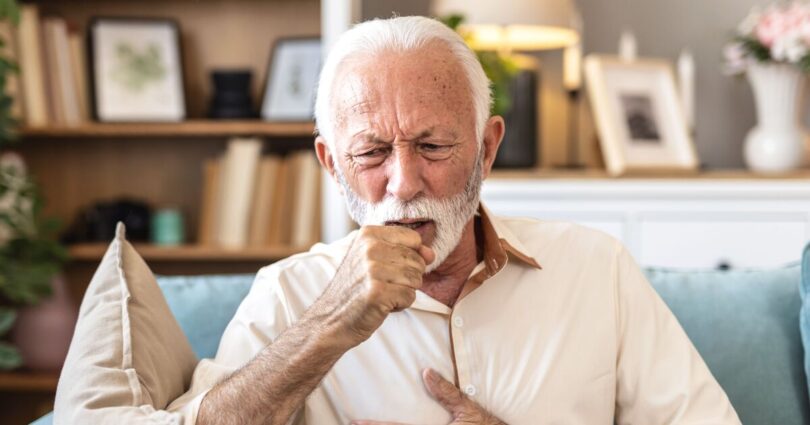
A medical professional has disclosed that the nature of your cough can indicate which winter ailment you’re suffering from. According to the expert, this telltale sign manifests differently depending on whether you’ve contracted a cold, influenza, or COVID-19.
In the winter, certain illnesses become more common. Viruses can spread more easily in colder temperatures and the fact we spend more time indoors around other people makes this worse.
Nevertheless, pinpointing the exact condition can prove challenging as numerous symptoms tend to overlap.
With this consideration, Doctor Rupa Parmar, a general practitioner and medical director at Midland Health, outlined several methods to distinguish between these ailments.
She explained: « There are some key differences between a common cold, Covid and flu that can easily help you differentiate them. But, if you’re still unsure, always consult your doctor. After all, it’s always better to be safe than sorry when it comes to health. »
Part of her guidance included information on distinguishing coughs associated with Covid, influenza and the common cold. « Coughs are common in all three viruses, but they have differences, » she noted.
Cold and flu
She elaborated: « With a cold, a cough will be mild, while a flu cough will seem dry. »
The NHS website clarified that cold symptoms emerge progressively over a two to three-day period.
By contrast, it stated that flu symptoms « come on very quickly ». According to the health service, « a dry cough » is a characteristic symptom of influenza.
Covid
If you’re suffering from Covid, your cough is likely to be dry and persistent. Dr Parmar explained: « With Covid, a cough will be dry and continuous, and many people will cough for more than an hour or have three or more coughing episodes within a day. »
The NHS characterised this as: « A new, continuous cough – this means coughing a lot for more than an hour, or three or more coughing episodes in 24 hours. »
Additional telltale signs of Covid include:
- A high temperature – you may feel hot, cold or shivery, or your skin is hot to touch on your chest or back (you do not need to measure your temperature)
- A loss or change to your sense of smell or taste
- Shortness of breath
- Feeling tired or exhausted
- An aching body
- A headache
- A sore throat
- A blocked or runny nose
- Loss of appetite
- Diarrhoea
- Feeling sick or being sick
The NHS cautioned: « The symptoms are very similar to symptoms of other illnesses, such as colds and flu. Most people feel better within a few weeks, but it can take longer to recover.
« For some people, it can be a more serious illness and their symptoms can last longer. »
It continued: « If you have a cough, you can ask a pharmacist for advice about cough treatments. »
What to do if you have Covid
The NHS advises that you ought to remain at home and limit contact with others if you or your child displays symptoms and either:
- Experience an elevated temperature
- Feel too unwell to attend work, school, childcare, or carry out routine activities
You can resume your usual activities when you feel better or do not have a high temperature.
Source link