
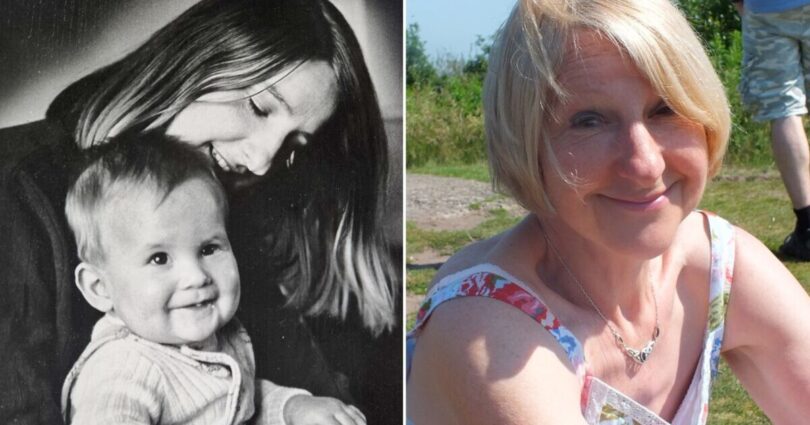
Chris has supported his mum since her 2016 diagnosis (Image: Chris Bane)
Decisions about funding for Alzheimer’s drugs must take into account the “hidden cost” for families left to pick up the pieces, a campaigner whose mum lives with the disease has said. The NHS spending watchdog is reexamining elements of its ruling on two breakthrough drugs, including whether it fully considered the impact of dementia on unpaid carers. Chris Bane, 51, has supported his mum Shirley, 77, since her Alzheimer’s diagnosis a decade ago.
Seeing her health decline has taken a huge emotional toll and he estimates that care has cost the family almost £1million. Chris said: “It is the hidden cost of dementia. A treatment that slows down the disease would keep somebody out of care for longer, would keep them looking after themselves for longer, and take some of that burden off the families and informal carers.”
Read more: I fly 1,200 miles every month so my dad can access dementia wonder drug
Read more: Simple blood test could spot dementia changes in your gut

Shirley with her sons Nick and Chris (Image: Chris Bane)
Shirley was diagnosed after Chris and his younger brother Nick picked up on worrying changes. Both were living abroad and noticed their mum sometimes repeated herself or had difficulty recognising her grandchildren during video calls.
Chris said: “We thought that was just modern technology, that generation not being used to communicating that way.
“Then one Christmas we met up at my brother’s in Abu Dhabi. Mum went to the bathroom and got lost upstairs, she couldn’t find a way down. That’s when we thought, OK, we need to get this assessed.”
Former nurse Shirley was diagnosed with Alzheimer’s disease in 2016, aged 67. Chris said the confirmation letter offered no advice about support. He added: “It’s almost like you get the diagnosis but then there’s not much that can be done.
“There are drugs that can mask the symptoms and some dementia events. But otherwise, it’s very much behind the front door and the family just has to pick up the pieces.”
Chris’s dad cared for Shirley until he died of Covid in January 2021. She then lived with Chris — who moved home to support his parents in 2019 — until November 2024, when she moved into a care home.
Chris said his mum tried taking a drug to mask her symptoms, but side effects included terrible headaches.
He added: “It’s super exciting to hear that there are these new drugs that do modify the disease and it’s proven that something can be done. It’s too late for mum, but I’m glad it’s not too late for everybody else — or me.”

Chris is happy to support his mum but dementia has taken a huge toll on them both (Image: Chris Bane)
Two drugs, lecanemab and donanedab, have been proven to tackle the underlying cause of Alzheimer’s and approved for use in the UK.
But they are not available on the NHS after NICE — the National Institute for Health and Care Excellence — ruled their benefits were “too small to justify the costs”.
Following appeals from the manufacturers, NICE announced last month it would review elements of the decisions.
These include the impact of Alzheimer’s disease on unpaid carers and the cost of care provided by family members and others.
Chris estimates that his mum’s care has cost around £1million; they have sold her family home to help pay for it. He said: “I wouldn’t spend it any other way, don’t get me wrong…but it’s a frightening number.”
The estimate includes things such as carers, her care home and supplies that are not covered by the NHS, such as incontinence pads. It does not include the value of unpaid care that Chris, his brother and their dad have provided.
Father-of-two Chris, who now works with Alzheimer’s Research UK to raise awareness of the impact of dementia, added: “For mum, it has robbed her of the years that she worked so hard to enjoy.
“At 67, she had just retired. My parents were frugal — they saved money for their retirement and to hand down to their kids and grandkids. But dementia has robbed mum of those years and relationships with her grandchildren.
“From my side, it’s a long, slow, painful goodbye as bits of mum disappear every few months. She’s there, but she’s not there. It is devastating to see her slowly disappear.”
Chris said dementia appeared to be “higher up on the agenda than it used to be”, with more investment in research.
He added: “The more money that goes into research, the faster an outcome is likely to come. So I’d like to see the government keeping their foot on the accelerator to find new treatments, bring them to market, and make them available to people in the UK on the NHS.”
Alzheimer’s Research UK is ugring NICE to change the way it assesses dementia drugs to reflect the wider impact of dementia care, as well as calling on the government to give dementia the same political priority as cancer.
David Thomas, the charity’s head of policy and public affairs, said: “Dementia places a huge and often hidden burden on families, with unpaid care costing the economy over £20bn a year.
“While these treatments offer modest benefits and can cause serious side effects, they provide the foundation for a future where dementia becomes a treatable condition.”
Source link