
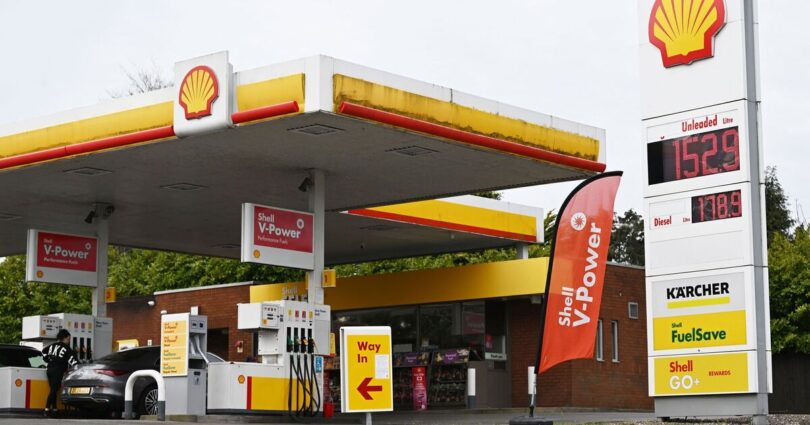
Fuel shortages could hit European households and businesses within weeks, the head of one of the world’s biggest energy companies has said, as the ongoing blockade of a critical Gulf shipping lane shows no sign of ending.
Shell chief executive Wael Sawan delivered the warning at an industry gathering in Houston, pointing to a cascading supply crisis that has already forced governments in Asia to impose emergency energy measures — with Europe next in line.
« It is a ripple effect, » he is reported to have said. « We see south Asia first to get that brunt, that moves to south-east Asia, north-east Asia and then more so into Europe as we get into April.
« So we are trying to work with governments to alert them to the levers they may need to pull – including demand‑side measures, what they need to do around storage, what they need to do around purchasing stock and so on and so forth. »
How the crisis unfolded
Tehran’s decision to shut the Strait of Hormuz has effectively bottled up roughly a fifth of global oil and liquefied natural gas supplies inside the Gulf, sending shockwaves through energy markets worldwide, reports the Telegraph.
The International Energy Agency has responded by urging member states to rein in consumption — putting forward proposals such as expanded working from home, reduced motorway speed limits and a shift towards buses and trains.
The impact has landed hardest in Asia, where dependence on Gulf energy runs deep. Several governments have cut the working week to four days, launched public campaigns to reduce household air conditioning and barred civil servants from non-essential foreign travel.
Sawan reportedly warned European administrations that comparable restrictions may be unavoidable before spring is out — measures not seen across the continent since energy rationing fears gripped governments in 2022.
The Royal Navy and allied planners are at the forefront of international efforts to force the Strait of Hormuz back open, with mine-hunting drone systems potentially operating from hired commercial vessels acting as mobile bases, military sources told the Telegraph.
Downing Street said on Tuesday night that the situation was under active watch, maintaining that the country’s energy infrastructure remained both varied enough and robust enough to absorb disruption.
Diplomacy and military pressure run in parallel
Washington is weighing an airborne assault on strategic islands off the Iranian coastline, even as Donald Trump told reporters on Tuesday that back-channel peace discussions with Tehran were continuing.
With Trump’s existing envoys — Steve Witkoff and Jared Kushner — frozen out by Iranian officials, who accused them of ‘backstabbing’ in earlier nuclear negotiations, Vice-President JD Vance is now being prepared to step in as a direct interlocutor, sources told The Telegraph.
Now four weeks into the conflict, financial analysts have cautioned that a sustained energy crunch could tip the British economy into contraction. Motorists have already felt the strain, with the RAC Foundation calculating that rocketing pump prices have drained hundreds of millions of pounds from drivers’ wallets.
The self-rationing threat
According to the report, a senior figure in the UK energy industry acknowledged the picture painted by Sawan was « one of the worst-case scenarios but still absolutely possible. »
The source drew a distinction between physical supply security and the price pressure already squeezing consumers and businesses.
« At the moment, people are less worried about the physical security of supply and more about prices, » they said.
« Remember, even at the height of the last energy crisis, when we lost huge gas volumes from Europe, we still managed to ensure security of supply. »
The critical threshold, they suggested, could arrive somewhere between June and July.
« Clearly there is a point – and it is hard to know exactly when, perhaps June or July – where you get substantial rises in prices and the question becomes whether Europe is actually willing to pay to get it. »
Beyond that point, the source warned, prices could climb so steeply that households and businesses begin cutting their own consumption without being told to — the moment rationing becomes a matter of economics rather than government decree.
Source link