
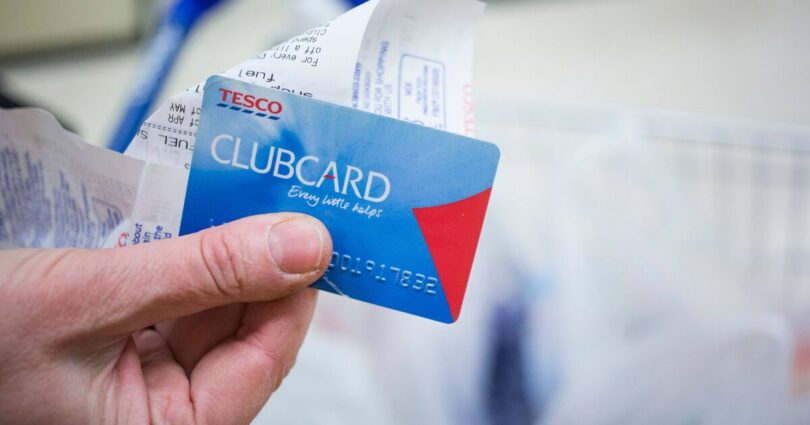
Scientists are analysing shopping data to identify early signs of 10 different types of cancer (Image: Getty )
BBC Morning Live’s resident GP, Dr Oscar Duke, has revealed the latest findings from a study designed to potentially help people spot early warning signs of cancer through their purchasing patterns. The medical expert discussed the recent developments during today’s programme (February 11), presented by Neil Jones and Helen Skelton.
Dr Oscar explored the research, spearheaded by Imperial College, now in its second phase, to establish whether loyalty card information from retailers such as Boots and Tesco could be used to identify potential « cancer red flags ». Scientists suggest that consumer behaviour recorded in loyalty card data, including that from Boots and Tesco, may help detect cancer earlier.
The research involves nearly 3,000 participants to determine whether purchasing patterns can serve as an early warning for 10 different forms of cancer. Previous work by the same team found that an increase in purchasing painkillers and indigestion remedies could suggest early indicators of ovarian cancer.
The scientists will now search for trends associated with other malignancies, including bowel, bladder, endometrial, liver, ovarian, and pancreatic cancer. The research group will analyse data from volunteers who consent to share their information via Tesco Clubcard and Boots Advantage Cards.
If the study proves successful, a customer could receive a notification based on their shopping habits. This alert might indicate that their purchasing pattern matches one identified in the research for a specific cancer and recommend they consult their GP, reports the Mirror. The aim is to discover a « very simple, potentially very useful way of finding data and health linking ».
Read more: Morning Live expert calls for two-second check to protect against fraud
Read more: Tesco set to change ‘unfair’ Clubcard rule to save customers cash
Speaking to viewers about the study, Dr Oscar said: « People often worry about their loyalty cards in the supermarket. What’s the data? Who’s holding it? We’re all very rightly conscious of data that’s being held on us now. But could data actually be very helpful to our health or in predicting things that might happen?
« So, this is the second phase of a study which we actually talked about three years ago on the show, done by Imperial College. They were one of the leaders in this study. And what they did in the first phase was look at people’s data from their loyalty cards to see when they were buying certain things, particularly things like pain medications, indigestion remedies, and trying to see if they could link it in that study to ovarian cancer and whether they could establish a potential link. »
The health expert revealed that researchers discovered in their study that approximately eight months prior to an ovarian cancer diagnosis, there was a noticeable shift in patients’ purchasing patterns for such remedies due to symptoms they were experiencing. He continued: « So they’re coming back with version two of the study now to look for many, many more different types of cancers. »
Offering insights to viewers, Dr Oscar explained that researchers will examine 10 different cancers, particularly those presenting subtle and challenging symptoms to detect. « It might be a bit of bloating, might be a bit of indigestion, might be a bit of pain, » he noted.
« So, the sort of thing that you might be just medicating yourself for in the supermarket, making sure you’re using your loyalty card. »
The study will include approximately 2,900 participants to establish whether researchers can identify further patterns. Discussing potential future developments, Dr Oscar suggested that shoppers could receive health warnings based on their loyalty card information.
He explained: « And then maybe down the line, what will be able to happen is people might actually be able to receive a message saying, ‘We’ve noticed that your trend is following the pattern from this research of somebody who may have had this particular cancer. You should go and see your doctor and get some more information.’ So, if it can work, a very simple, potentially very useful way of finding data and health linking. »

Shoppers may receive a health alert based on their loyalty card data in the future (stock image) (Image: Getty)
What are some of the common and subtle warning signs of cancer?
Common warning signs can include:
- Unexplained weight loss.
- Persistent fatigue.
- New or changing lumps.
- New moles or changes to existing ones.
- Sores that do not heal.
- Persistent fever or night sweats.
- Unexplained pain.
- Unusual bleeding or bruising, coughing up blood, blood in stool or unusual vaginal bleeding.
Subtle red flags to watch out for:
- Persistent heartburn or indigestion.
- Bloating that happens often or lasts a long time.
- Difficulty swallowing.
- Change in bowel habits.
- Hoarseness or a cough that won’t go away.
- Feeling full quickly or not feeling as hungry as normal.
- A headache that lasts for over two weeks and does not respond to treatment.
In the UK, almost 3.5 million people have cancer, and this number keeps going up, with more than 420,000 new cases found each year. This increase shows that we are getting better at diagnosing and treating cancer, so more people are living with or after a cancer diagnosis than ever. This includes a lot of people with breast, prostate, bowel, and lung cancers.

Checking your skin for what’s normal and what isn’t can help detect warning signs early (stock image) (Image: Getty)
What have officials said about the research?
Professor James Flanagan, the study leader from Imperial College London’s Department of Surgery and Cancer, stated: « This study ultimately has the potential to revolutionise how we can use everyday data to understand and improve people’s health. We’re excited to build on the success of our first study and to see if looking back at people’s shopping history can give us clues to the way different conditions start to appear. »
Oonagh Turnbull, head of health and sustainable diets campaigns at Tesco, stated: « We hope that with the help of our customers across the UK taking part and volunteering to share their Tesco Clubcard data, more lives can be saved by detecting certain cancers early. »
Marc Donovan, healthcare development director at Boots, commented: « Over a quarter of the UK population has a Boots Advantage Card, and this study represents the potential for everyday shopping data, when used responsibly, to be a powerful tool in helping customers spot and act on early healthcare warning signs. »
Dr Talisia Quallo, head of prevention and early detection research at Cancer Research UK, commented: « The first Cancer Loyalty Card study, funded by Cancer Research UK, showed differences in purchasing behaviour of pain and indigestion medication between women with and without ovarian cancer, up to eight months before a formal diagnosis.
« In the future, shifts in purchasing behaviour could act as an early warning system, prompting people to seek medical care more quickly for emerging symptoms. Changes in what we shop for, and when those changes start to happen, could become a powerful tool to find cancer at an earlier stage, when treatment is much more likely to be successful. »
Source link