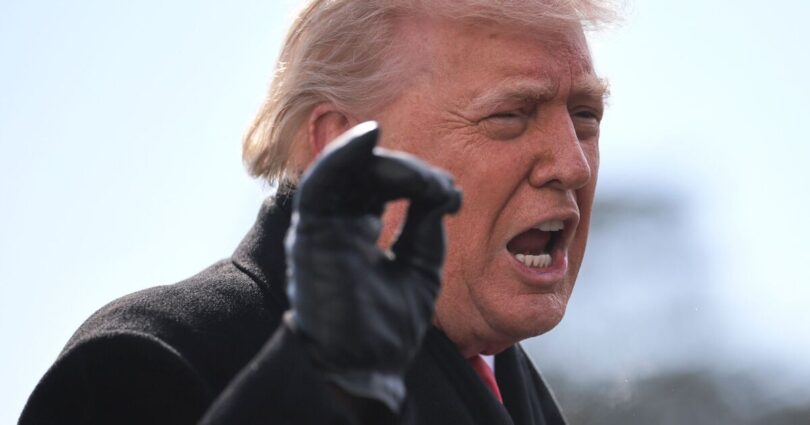
Iran’s weakened regime could survive unless Kurdish ground forces are allowed to join the fight, a senior leader of one of their armed groups has warned — as Donald Trump’s shifting signals leave the coalition uncertain whether Washington will back them .
Babasheikh Hosseini, general secretary of the Khabat Organisation, told reporters: « If we are not on this battlefield, the end of the regime will either not occur, or be delayed by a lot. »
Kurdish groups have spent years working towards exactly this moment — hoping to topple the Islamic Republic, secure greater autonomy and potentially carve out an independent state. The early days of the war appeared to offer an opening, with Trump declaring: « I think it’s wonderful that they want to do that, I’d be all for it. »
Days later, he reversed course. « The war is complicated enough without getting the Kurds involved, » he said.
Ready but waiting
According to a Telegraph report, Trump’s inconsistency has done nothing to dampen the determination of the newly formed Kurdish coalition — an alliance that came together less than a week before the first shots were fired.
Mr Hosseini said: « If our peshmerga were on the ground, and we told the people of Rojhelat to rise, then the fall of the regime would have been much closer by now. »
But clarity from Washington remains elusive.
« We want to understand America’s policy, » he said, adding that at one point « Trump said, ‘We’re going to stop fighting,’ but then hours later he said, ‘No, the war is going to continue.' »
« We don’t understand their position at the moment, » he said. « We can still launch an invasion alone, but with their help it will be much better. »
Conditions are right
The toll on Iran’s leadership has been severe. The supreme leader himself fell on the opening day of hostilities, and a string of further strikes have picked off senior figures in the weeks since — the most recent being the killing of Ali Larijani, who headed the country’s national security apparatus.
Speaking from the semi-autonomous Kurdistan region inside Iraq, according to the report Mr Hosseini said the cumulative damage had created a rare window of opportunity.
« The regime is very damaged now, but the US needs a strategy to fully overthrow it, » he said. « The conditions are good now on the ground. The conditions are great for us to go into Iran.
« But we shouldn’t forget that we are guests here, and we cannot pose a threat on Iraqi Kurdistan. If we take any action, it could put the Iraqi Kurdistan region [in northern Iraq] under threat. »
Iraq caught in the crossfire
The region is not a safe haven. Kurdish opposition movements have based themselves there for decades, and that presence alone has been sufficient to draw fire — from Iranian forces and from the network of Iran-aligned militias embedded across Iraqi territory.
Washington and Tel Aviv have struck back at those same proxy forces, leaving Iraq in the unique and uncomfortable position of having absorbed attacks from every party to the conflict.
However, the Kurdish strategy is not without precedent. In Syria, similar forces proved indispensable in dismantling Islamic State’s territorial grip — and the logic in deploying them against Tehran is not lost on Washington planners looking for a way to achieve regime change without American soldiers setting foot in Iran.
That calculation has become more fraught since Trump moved thousands more marines into the region, a decision that has already generated significant political blowback at home.
Whether he changes his mind again remains to be seen.
Source link