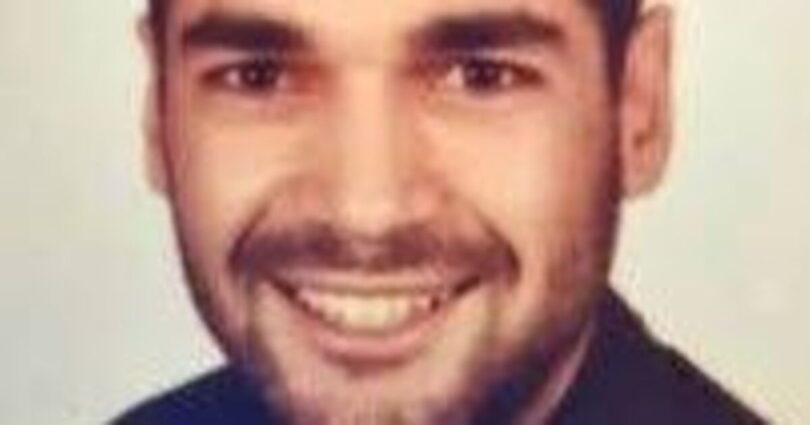
Flight attendant Andreas Prodromou tried to save the plane (Image: Wikipedia)
One of the most eerie and peculiar plane crashes in aviation history, known as the « Greek Ghost Flight », claimed all 121 lives on board and remains shrouded in mystery.
Helios Airways Flight 522 crashed into mountainous terrain near Grammatiko, Greece after passengers and crew lost consciousness early into the flight.
Tragically, experts uncovered a terrifying error that led to the fatal disaster, resulting in a British-born Helios engineer being erroneously convicted of manslaughter. Alan Irvin was later exonerated of his charges and his reputation was reinstated.
Aviation expert David Lermount, who has analysed air disasters for over four decades, said: « It was an appalling decision, because in the end, It’s one of the checks the pilots should have done. »
David, a consulting editor at Flightglobal magazine, added: « The whole aviation system, is based on the idea that one single slip should not cause a disaster, because there are a whole load of people who check these things and if they don’t, the whole system fails. I think it was sheer carelessness from the pilots. And it led to the most freakiest air accidents I can ever remember. », reports the Daily Record.
Two decades ago, on Thursday 14 August 2005 at 9.07am, Flight 522 departed from Larnaca Airport heading for Athens.
The planned journey was one hour and 45 minutes, yet more than two hours after take-off the aircraft was still airborne – rapidly depleting its fuel reserves.
READ MORE: ‘I’m a travel expert – economy passengers should always sit in these seats’
READ MORE: Horror as passenger plane erupts in flames seconds after take-off

Firemen extinguish the fire burning near the tail fin (Image: AFP/GETTY IMAGES)
Helios was a budget charter airline providing economical flights to Greece. It was the height of summer and the aircraft was brimming with families.
Flight 522 was commanded by Hans-Jürgen Merten, a German contract pilot hired by Helios for the busy holiday season. His co-pilot, Pampos Charalambous from Cyprus, had been exclusively employed by Helios for the past five years.
The departure proceeded as planned but minutes after takeoff, while the aircraft was still climbing to its cruising altitude, an alarm rang in the cockpit. The takeoff configuration warning typically only triggers on the ground.
The captain reached out to the Helios Operations Centre at Larnaca airport in Cyprus concerning the takeoff configuration alarm and then another alert – the Master Caution alarm, indicating the system was overheating – sounded while he was conversing with engineer Alan Irwin.
Simultaneously, oxygen masks dropped for surprised passengers – unbeknownst to the pilots who were trying to identify the issue with ground control.
As the crew didn’t think they were dealing with cabin pressure problems, they focused on the aircraft’s cooling systems.
Irwin, then 44, was recorded asking the captain to confirm that the pressurisation panel was set to auto. The captain did not respond.

Helios airways Boeing 737 plane (Image: AFP)
It is speculated he may have been suffering the effects of hypoxia, but had he answered Irvin’s question, the mistake would have been detected and disaster averted.
Instead, the captain left his seat to look for the aircraft’s cooling circuit breakers – trying to address what he erroneously believed was an overheating issue.
Within moments, radio contact with the pilots was lost. Fears escalated that the plane had been commandeered.
The Greek Air Force dispatched fighter jets to inspect the Helios aircraft.
They were stunned to find no trace of the captain and discovered the co-pilot slumped in his seat. There was no activity from the passengers, but then one of the jet pilots spotted a figure entering the cockpit and occupying the captain’s seat.
Suddenly, the aircraft executed a sharp left turn and started losing altitude swiftly. Just after midday, nearly three hours after leaving the island, Helios Flight 522 crashed into the ground.
The chief coroner visited the crash site where pieces of the aircraft were strewn amongst the burnt remains of victims and later characterised it as « the worst experience of his life ».
Most of the bodies were incinerated beyond identification, but autopsies revealed they were all alive but unconscious at the moment of impact.
This included the captain who investigators suspect collapsed due to lack of oxygen – after exiting his seat. Investigators found additional tissue samples in the cockpit debris, which were identified as belonging to Helios flight attendant Andreas Prodromou. Andreas held a commercial pilot’s licence and aimed to become a captain with Helios.
He was the person the fighter jet pilot had spotted sitting in the captain’s seat.
However, no degree of training could have allowed him to land the aircraft safely. The plane banked left because moments after they saw Andreas entering the cockpit, the left engine had run out of fuel.
The cockpit voice recorder was recovered and Andreas could be heard breathlessly calling Mayday – yet this was never received by anyone on the ground – probably because the radio remained tuned to Larnaca, the Cypriot airport from which the flight had taken off.
Each passenger had adequate oxygen for 12 minutes at high altitudes. During this period, pilots are able to bring the aircraft down to a lower altitude. But Helios 522 had nobody at the controls.

Firemen carry a body covered in a sheet (Image: AFP)
Oxygen masks don’t activate automatically in the cockpit. As a result, the pilots fell victim to hypoxia before the passengers. The autopilot would have put the jet in a holding pattern – with nobody flying the aircraft.
There were four portable oxygen cylinders on board the 737, each capable of lasting an hour. All four cylinders were found at the crash site and three appeared to have been used.
This is how investigators believe Andreas survived the hypoxia long enough to attempt flying the plane. As post-mortem examinations showed, everyone on board except Andreas had lost consciousness. Although they possessed a heartbeat at the point of impact, they were almost certainly in an irreversible coma resulting from oxygen starvation to the brain.
The cause was tragically attributed to a single flick of a switch. Crash investigators discovered the pressurisation selector switch had been left in « manual » rather than « auto » following a pre-flight safety inspection.
This was attributed to human error and British-born Alan Irwin, the engineer who had conducted the check, was considered largely responsible.
The final investigation determined he did not return the switch to its correct position after his inspection. The final report also criticised the pilots who had failed to spot the error.

Firemen carry stretchers through the debris (Image: AFP/GETTY IMAGES)
Boeing, the aircraft manufacturer, issued a statement during the crash inquiry: « Helios’s ground engineers did not follow Boeing’s correct procedure.
At least 16 separate mistakes were made by the ground staff, the flight deck crew and the passenger cabin crew. If any one of these mistakes had not been made, the accident would not have happened. »
The accident investigation report, published in 2006, established that the crash had three direct causes: the switch being in manual; the failure to identify the cabin warning; and the crew being incapacitated by hypoxia.
Aviation safety expert David Learmount added: « Many things played a part in the crash but ultimately by doing their checks properly, the pilots could have and should have prevented this accident. »
In 2007, relatives of eight Cypriots who died in the disaster pursued €76m (£69m) in compensation from Boeing, for having « the same alarm in place for two different types of dysfunction », their solicitor, Constantinos Drougas, explained. The case was settled out of court and the families received an undisclosed sum.
Irwin, along with other Helios employees, faced manslaughter charges, was convicted, and handed a 10-year prison sentence while remaining at liberty on bail pending an appeal.
By 2013, Irwin succeeded in his appeal. The other defendants were unsuccessful in their bids to overturn their convictions.
Source link