
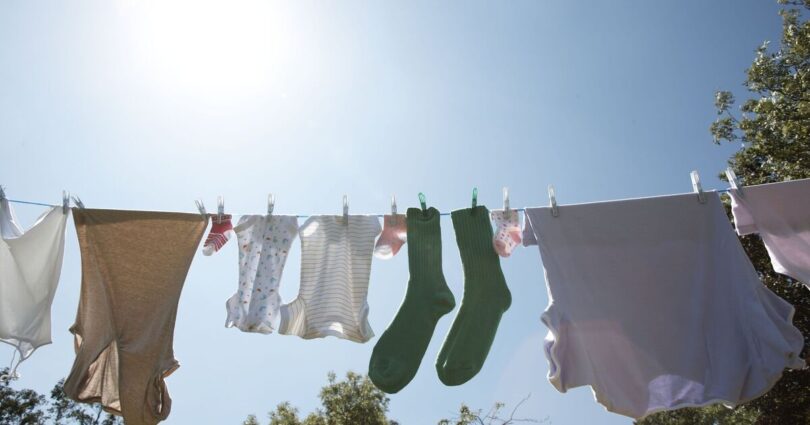
Hay fever sufferers are being urged not to dry clothes outside (Image: Getty)
Spring is a welcome shift for many, bringing longer days, milder temperatures and the return of greenery and blossom. But alongside the brighter weather comes a less welcome seasonal change – the rise in pollen levels that can trigger misery for millions of hay fever sufferers. Nearly 10 million people in England suffer from hay fever every year and this affects people of all ages.
That equates to about one in four adults and around one in 10 children. According to the Met Office, the number of sufferers is also rising year on year. Typical symptoms include sneezing, coughing, a blocked or runny nose, itchy or watery eyes, fatigue and even a temporary loss of smell. Unlike a cold, which usually clears within a week or two, hay fever can persist for weeks or even months during peak seasons.
READ MORE: Households urged to avoid drying clothes outside this weekend
READ MORE: Hay fever sufferers swear by £12 Amazon gel for dry, irritated eyes

Large parts of the UK are expected to have very high pollen counts on Thursday and Friday. (Image: Getty)
The Met Office pollen forecast predicts “very high” counts across large parts of the UK on both Wednesday and Thursday, driven by very high levels of birch and ash pollen, alongside high levels of plane pollen.
On Wednesday, very high pollen levels are expected in North East England, North West England, Yorkshire and the Humber, the East Midlands, East of England, West Midlands, Wales, London, the South East and the South West.
Conditions remain similar on Thursday, with particularly high counts forecast again for Yorkshire and the Humber, the East Midlands, East of England, West Midlands, London, the South East and the South West.
The Met Office’s advice for when the pollen count is in the « very high » category reads: « Avoid being outside or seek shade from 11am to 3pm. Shirt, sunscreen and hat are essential. »
Households are also being urged to avoid drying clothes outside on washing lines. The NHS has warned that during periods of high pollen, there are several things people should avoid to help keep symptoms under control and this includes drying clothes outside.
In addition, the NHS says you should not cut or walk on grass, limit time spent outdoors, and not keep fresh flowers inside. People are also warned to avoid smoking or being around smoke, as it can make symptoms worse.
Hay fever sufferers have been advised to keep pets out of the house as they can carry pollen indoors on their fur and further aggravate symptoms.
In terms of what you can do to help ease your symptoms, the NHS says applying a small amount of petroleum jelly, such as Vaseline, around the nostrils can help trap pollen before it is inhaled, while wearing wraparound sunglasses, and a face covering or a wide-brimmed hat can protect the eyes and face.
People are also advised to shower and change clothes after being outdoors to wash off pollen, keep windows and doors closed where possible, and clean regularly by vacuuming and dusting with a damp cloth. Using a pollen filter in car air vents and a HEPA filter in vacuum cleaners may also help reduce pollen levels indoors.
Source link