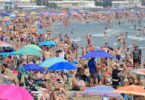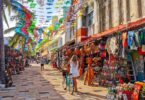

Praia de Chaves Cape Verde Islands (Image: Getty)
Another day, another horrible health and travel story. Today’s is from France, where over 200 school children, including Britons, were struck down by what is being described as an “apocalyptic” gastroenteritis outbreak at an Alps ski resort in the first days of this month.
Such stories – particularly those about what we might colloquially call “tummy bugs” – seem to be growing more commonplace, especially whenever holiday season rolls around. This week, as the Easter break draws to a close, Britons up and down the country will be turning their thoughts to the summer holidays, and where they might travel next.
But with stories like the above, and a recent YouGov survey revealing that a staggering 13 percent of Brits who travelled abroad between 2022 and 2024 fell ill during their trip, some might start to think the safest option would be to just stay at home and forget about international travel entirely.
Read more: ‘We need a giant of diplomacy to get out of this mess – we’ve got Yvette Cooper’
Read more: ‘Ed Miliband’s madness on Net Zero won’t even be stopped by £3-a-litre diesel’
I’m here to tell you it shouldn’t be. And as the minister of tourism for Cape Verde – an island paradise and popular tourism hotspot, which welcomed over 400,000 British visitors last year alone – I know a thing or two about international travel. Here’s five bits of advice for when planning your next trip.
First, wherever you are going, don’t take health precautions lightly. Even in an experienced and safe tourism hotspot like Cape Verde – where the UK Health Security Agency (UKHSA) figures extrapolate as few as 0.04 per cent of British tourists experience anything at all – there is always a possibility, however tiny, you may get sick. The World Health Organisation tells us that gastroenteric illnesses exist in every country in the world. Add to that the climate and food in warmer countries that you might not be accustomed to, and it’s always sensible to take precautions.
Second, there’s no way to be 100 percent certain you’ll never experience an unsettled stomach or something such as diarrhoea when the various bacteria such as shigella and salmonella which cause it are prevalent in so many places worldwide. Indeed, only last year the European Centre for Disease Prevention and Control reported that of 38 persons with shigella they monitored, 29 had recent international travel – with 22 visiting countries in Asia including Singapore, Thailand, India, Sri Lanka, UAE and Saudi Arabia, and four having travelled to Africa and Australasia. And yes of course it has also occurred in Cape Verde. Still, it’s important to remember these numbers are very small indeed compared to the many millions of visitors to these countries respectively each year.
Third, follow the general advice of agencies such as the United Kingdom Health Security Agency which are there to help you. The UKHSA outlines several general precautions you can take when travelling abroad, which are mainly just good common sense, but can be the difference between enjoying your holiday in good health or spending it in your hotel room. These include regularly washing and sanitising your hands, staying hydrated and using sunscreen if you’re going to be spending a lot of time in the sun. Obvious, maybe, but you’d be surprised when tourists omit one or more of these simple precautions and can become unwell as a result.
Fourth, it’s also always a good idea to check if your holiday destination has a robust health service with modern facilities, so if something does go wrong, you know you’ll be able to promptly receive proper treatment when you’re there. Cornell University’s Health Security Index, which scores the capacity and robustness of countries’ health systems, is a useful tool for this. I’m proud that Cape Verde scores higher than many other popular British holiday destinations like Egypt, Morocco and Tunisia.
Fifth, with all the travel stories in in the news these days, it can sometimes be difficult to tell which are legitimate warnings to take seriously, which are overzealous news sites looking for a few extra alarmist clicks during holiday season, and – in some cases – which stories have been pushed and exaggerated by lawyers seeking to generate publicity for the health cases they are working on.
As long as you are taking the simple checks and precautions, you can navigate the alarmist and negative headlines and travel abroad in safety, positivity, and with peace of mind. I suppose I wouldn’t be doing my job properly if I didn’t encourage you to visit the islands of Cape Verde. Whether kite surfing on our beautiful beaches, hiking our volcanoes, quad biking across our salt flats or snorkelling with baby sharks, we’ve got something for everyone. Come visit – and do so safely!
Dr. José Luís Sa Nogueira is Minister of Tourism and Transportation for Cape Verde
Source link