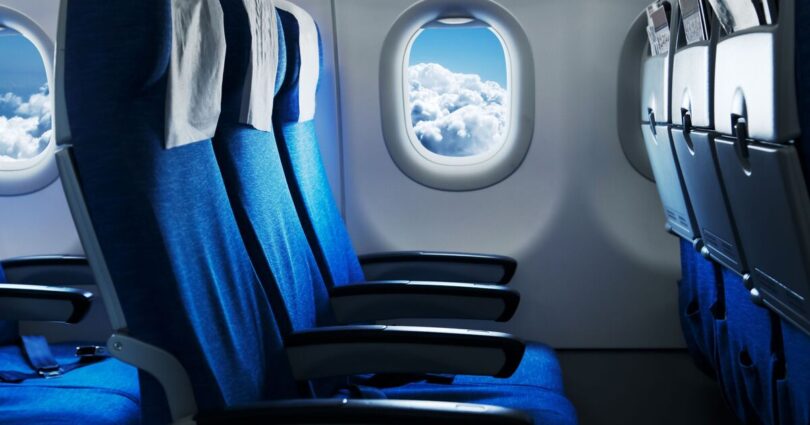
A new airline policy means passengers would be forced to buy two plane seats (Image: Getty)
Southwest Airlines is facing mounting backlash as a policy change meanssome passengers are at risk of being forced to buy a second seat at the airport or miss their flight altogether.
The US carrier was once known for having one of the more flexible approaches for larger passengers. Previously, customers who required extra space could book an additional seat in advance and receive a refund later, or in some cases be offered an extra seat at the gate at no additional cost.
However, that policy was scrapped in January when the airline moved away from its long-standing open seating model to an assigned seating system. Under the new rules, passengers who cannot fit within a single seat, defined by the armrests, must purchase an additional seat in advance or potentially be required to do so at the airport.
The change has sparked criticism from travellers who say enforcement is inconsistent and based on subjective judgement by staff.
READ MORE;: Major airlines plunges into liquidation – in business since 2007
READ MORE;: Jet2 clarifies luggage policy for customers travelling with children

The change has sparked huge backlash (Image: Getty)
Passenger Kari McCaw said she was stopped while travelling to a conference in Las Vegas and told she would need to buy a second seat or be denied boarding. In a video posted online on March 10, she described feeling singled out because of her appearance.
“You just made this arbitrary look at my body,” she said. “I fit in a normal airplane seat just fine. I may use a seatbelt extender, but that doesn’t mean I need two seats.”
Under the airline’s policy, passengers who “encroach upon neighbouring seats” must pay for the additional space they require, with the armrest acting as the boundary. Refunds for extra seats are only guaranteed if the flight departs with at least one empty seat.
Critics argue that the wording leaves too much room for interpretation, with decisions often made at the discretion of gate agents.
Social media users have labelled the policy a “fat tax”, with some accusing the airline of discrimination. Content creator Samrya said staff appear to make snap judgements without clear criteria.
“There is no standard they are using,” she said in a widely shared video. “They are literally just deciding based on how someone looks.”
Another creator, Stella Kittrell, said the policy left her feeling anxious before a recent flight. She said she wore her “skinniest outfit” to the airport and felt close to a breakdown while waiting to board, although she was ultimately allowed to fly without issue.
Other passengers report more serious disruption. Jessica Skinner said she was stopped at the airport and told she needed to purchase an additional seat, causing her to miss her original flight. She later said she had to borrow money from family to rebook the journey the same day.
Kenny Slack, another traveller, claimed he was flagged by staff because he had previously used the airline’s policy when he weighed more, despite no longer needing extra space.
Some passengers have also reported being required to purchase a second seat on connecting flights or return journeys, even when they were not challenged on their outbound leg.
Other airlines have similar policies, though practices vary. Alaska Airlines, for example, allows passengers to request a refund for an additional seat, but only if space remains available after boarding.
In a statement, Southwest Airlines said its policy is designed to ensure comfort and safety for all passengers, and that customers who require additional space are encouraged to book accordingly in advance.
Its website reads: « Customers who encroach upon the neighboring seat(s) must purchase the number of seats needed. Customers should purchase the seats prior to travel to ensure adjacent seats are available. The armrest is considered to be the definitive boundary between seats; you may review information about the width of Passenger seats. In addition, Southwest® may determine, in its sole discretion, that an additional seat is necessary for safety purposes. »
Source link