
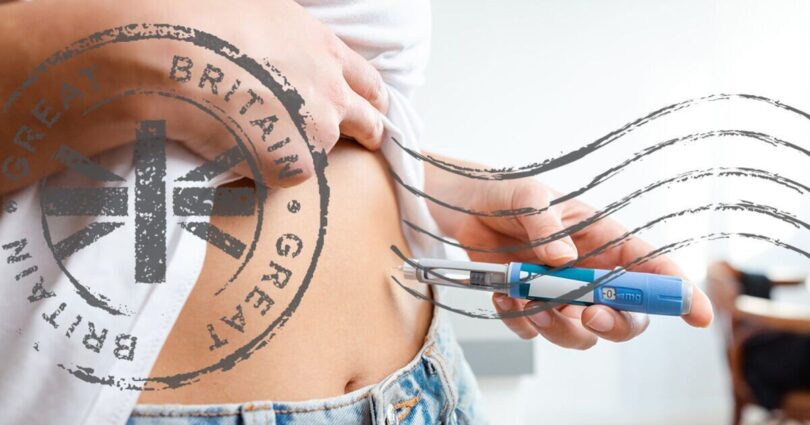
Huge variations in the availability of weight loss jabs on the NHS has been revealed (Image: Getty)
After years of trying diets that never stuck for more than three months, Deborah Pasha’s weight hit 17.7 stone. She avoided cameras and socialising and just “didn’t want to be around people”. The 58-year-old recalls: “My whole social life finished because I didn’t want to go out. I was at an unhealthy stage where it was really getting me down.” Then came the final straw — her GP delivered a shocking diagnosis of type 2 diabetes.
Deborah was determined to turn her life around and asked her GP about weight loss jabs. Despite previously being offered bariatric surgery, which she declined, she was initially told she could not get an NHS prescription for the medication.
However, a pharmacist at her GP surgery mentioned the Right to Choose pathway, which allows patients to request a specialist referral to a private provider that has a contract with the NHS. After a 15-week wait, her eligibility was confirmed in September. She received a prescription for Wegovy. Just six weeks later, Deborah, from Islington, north London, had shed 1.5 stone and put her diabetes into remission.
Read more: The simple fitness tip that could be the key to keeping a heart healthy
Read more: How a daily cup of tea or coffee ‘could stave off dementia’

Deborah Pasha, with her labradoodle Fred, shed 1.5 stone in six weeks on Wegovy (Image: Supplied)
“That gave me the kick up the bum to carry on,” she beams. “I’ve lost four stone now. I was only diabetic for six weeks. It was perfect – it showed me that the jabs were working, that my lifestyle change had worked.”
By late February, Deborah’s weight had dropped to 13 stone 3lbs and, with the medication’s help, she feels in control for the first time. She adds: “All the diets I’ve tried, they seem to work for about three months. Then you say to yourself, ‘I’m missing out. I’m not enjoying this diet anymore because I want a kebab or I want fish and chips’.
“You start cheating. You say, ‘I’ll only cheat once a week’, and then I’m back to square one again and I’ve put the weight back on. This is the longest I’ve ever been on a weight loss journey. I’m managing to do things fresh and cleaner.”
Deborah’s story is not unique. GLP-1 drugs have been hailed as revolutionary for the treatment of obesity and demand has rocketed in recent years as suppliers struggle to keep up. Around 2.5 million people are thought to be using the medication in the UK, the majority receiving private prescriptions. But a survey for Oviva — the weight management provider that supported Deborah — found awareness among older generations remains low.
The poll of 2,000 adults found one in five over 65s had never heard of common jabs including Wegovy, Mounjaro and Saxenda — the highest of any age group. Only 19% of people aged 55-64 and 14% of over 65s knew the NHS eligibility criteria, compared with a third of those aged 25-34 and 37% of people aged 18-24.
Oviva’s chief clinical officer, Lucy Jones, says: “There is a disproportionate awareness based on age groups, so adults over 65 were the least likely to be able to name a weight loss injection.
“This is a real problem because older adults are more obese, so they have the highest risk for obesity, but also they have the riskiest type of obesity. Our chances of having complications from obesity increases as we get older. So the chance of someone having a cardiovascular event like a heart attack or a stroke, developing cancer, needing a hip or knee replacement, or developing dementia, all of that’s going up. »

Lucy Jones, chief clinical officer of weight management provider Oviva (Image: Milo Boyd)
Higher awareness among younger people was driven by information on social media, advertising and online discussions, the research found. Lucy adds that there may be “different discussions” happening across age groups. “Aesthetics tend to play a greater role for younger age groups and there is an aspect of self-acceptance as we get to middle and older age groups.
« But when it comes to the health risks, the evidence is very clear that being obese in middle age dramatically increases your risk for secondary complications.”
Deborah says dozens of her friends were unaware that they could access the medication through the NHS pathway she used. She was also surprised to be offered bariatric surgery first, something she believes should be “a last resort”. “Nobody offered me weight loss meds, and when I asked, I was told no.”
National guidelines set out criteria to access the drugs on the NHS, with BMI thresholds that vary depending on ethnicity and whether a patient has weight-related health problems.
However, some Integrated Care Boards (ICBs) impose additional restrictions. Oviva’s recent analysis of data obtained using the Freedom of Information Act found only one in 345 obese people in England were being referred to access weight loss jabs on the NHS. There was also wide variation, from one in 714 in the Midlands to one in 116 in Yorkshire and the Humber.
Lucy adds: “Even if older people are eligible and know that they’re eligible, many can’t get treatment because of this postcode lottery. It’s because of the very high cut-offs that are being put in by certain regions of the NHS, meaning you have to have a really high BMI and lots of comorbidities.
“What we really want to do is to expand access to the people who are most clinically in need, and that very much is focused on the over 55s and people from lower socioeconomic groups.”
Administering the drugs was relatively easy, Deborah says. “You don’t really feel it. The needle is so small, it’s not an intravenous needle. I got my daughter to do the first one, but it’s so easy. There’s no pain. I did read a lot of literature before I attempted to take anything because I wanted to know the possible side effects and downsides, but I’ve had nothing.”
The drugs are not intended to be used by themselves and Oviva offers a comprehensive plan including advice on changing your diet and lifestyle.
How do weight loss drugs work?

Weight loss drugs (Image: PA)
For those who remain in the dark about weight loss jabs, Lucy Jones offers a quick explanation. “They mimic incretin hormones,” she says. “Incretin hormones are ones that our gut releases that help us to feel full. You can almost perceive it like you would correct a thyroid deficiency. We are essentially supplying the body with more of the hormones that help you to feel full.
“The best way to deliver those up to now has been through an injection. They started off with daily injections with the older version, Saxenda (liraglutide), and now people only have to have a once weekly injection, which is either Wegovy (semaglutide) or Zepbound (tirzepatide).
“These are transforming obesity treatment. When somebody just makes changes to their diet and improves their exercise level, usually you lose between five and 10% [of body weight in a year]. With these medications, you’re losing more like 15 to 20% in a year. And it seems to be going beyond weight loss. We’re expecting new guidance out this year that will mean that they become available to people with a lower BMI who have cardiovascular disease, because there’s very clear evidence that for somebody who’s had a heart attack or a stroke, starting these medications dramatically reduces the risk of having another one.”
Deborah is a single mum and carer for her 22-year-old son, who has autism, ADHD, sensory processing disorder and hypermobility. She cannot afford to cook separate meals for herself while catering to her son’s very specific diet — his food must be spicy or flavourful. His favourite dishes include chips, chicken wings and curry chicken.
Supported by dieticians and nutritionists through a messaging app, Deborah learned to adapt meals. Instead of steak, chips, mushrooms and fried onions, she might serve herself a smaller portion of steak with a boiled or jacket potato and salad. While her son has fish and chips, Deborah might opt for fish without the batter with just a few fries and salad. She has arthritis in her hips, knees, shoulders and hands, making exercise difficult, but enjoys long walks with her labradoodle, Fred.
Deborah understood from the outset that she would not lose weight unless her thinking changed. She adds: “It’s not a magical injection. There are a lot of lifetime lifestyle changes you have to make. »
Lucy says information about the drugs should be more easily accessible to older people, and those with the highest clinical need should be targeted for treatment, rather than “needing to self-advocate and plead with their doctors for referrals”. “At the moment, it’s all pull rather than push,” she adds.
Despite pressure on global supplies and the NHS, Lucy says the capacity exists to deliver them at scale. “Oviva is able to provide access to medication and the wraparound services at a national level,” she adds. “We have to make sure that actually the funding is there for each ICB and that there is clear guidance from the Department for Health and Social Care and NHS England. We are working with both to try and make sure there is a better rollout nationally.”
Deborah plans to lose around two more stone, then switch to a lower maintenance dose for six months. “I don’t want to look like I’m not well,” she explains. “I just want to look healthier and be healthier.”
She is not worried about struggling to keep the weight off and says she has strong personal motivation. “My son can’t look after himself and I’m the only parent he’s got, so I need to be here to be able to help him until he can manage. I don’t want to be obese to the point where I give myself a heart attack or I’m diabetic and then fall really ill. I need to be here for him.”
Her advice for anyone considering drugs? “Give it a go. The worst that can happen is it doesn’t agree with you, you don’t lose weight and you have to stop. But the benefits far outweigh the negatives. I would advise every single person who’s obese or overweight and who’s thinking about going on a journey to start as soon as possible.”
Source link