
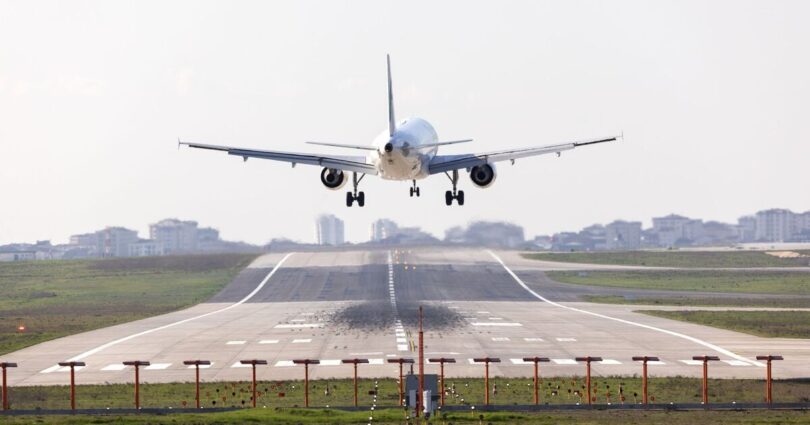
There’s some tricky airports across Europe (Image: Getty)
Embarking on a holiday should be a thrilling experience, yet several European tourist destinations feature airports that present significant challenges. Four sought-after European locations have been listed amongst the world’s most demanding airports.
Whilst countless aircraft safely depart and arrive at these airports daily, pilots must remain vigilant about potential hazards. These can include difficult runways, unpredictable weather conditions or demanding landscapes. Consequently, pilots complete specialist training to ensure safe landings at these airports.
READ MORE: Easter travellers warned over passport mistake that could cost you
READ MORE: Jet2, Ryanair and easyJet passengers warned against using colourful suitcase
This encompasses ground-based training, simulator practice and airborne exercises. The European Union Aviation Safety Agency (EASA) maintains safety standards throughout the continent, upholding rigorous requirements at airports. Most European airports fall under category A, which necessitates standard training.
Category B airports possess « slightly out of the ordinary » characteristics, whilst category C demands specialist training. Here are several of Europe’s most demanding destinations…
Innsbruck Airport, Austria
Numerous visitors travel to Innsbruck to experience the breathtaking Austrian Alps, yet these mountains create complications for pilots. Reports indicate that only captains are authorised to land aircraft at Innsbruck Airport, which sits deep within a valley.
The demanding manoeuvre to land in the valley is frequently made more difficult by low-level wind. Depending on the weather conditions, the pilot may need to execute a tight turn during the approach. There’s also a restricted opportunity for a missed approach due to the mountains surrounding the airport.

Innsbruck Airport is surrounded by mountains (Image: Getty)
Gibraltar International Airport, Gibraltar
Gibraltar has a rather unusual airport arrangement as a main road crosses the airport. Traffic is halted around 15 times a day to allow planes to land and take off.
For pilots, the challenges arise due to abnormal wind effects, turbulence and wind due to the famous Rock of Gibraltar. Diversions and go-arounds are common, with some flights even abandoning attempting to land.
Cristiano Ronaldo Airport, Madeira
Madeira’s runway may appear rather precarious due to it being a bridge right by the water. However, it has actually helped to enhance safety at the airport.
To land at the island, pilots require special training in order to be granted permission. Experienced pilots have to traverse mountains and exposed coastlines before lining up perfectly with the narrow runway whilst often facing high winds.
Tragically, a fatal accident occurred in 1977 when 131 of the 164 people on a plane died when it fell off at the end of the runway. The accident led to the construction of the runway extension bridge.

Madeira’s airport runway is a bridge (Image: Zu Sanchez 2016/Getty)
Courchevel Airport, France
The airport in the French Alps is frequently listed as one of the most perilous globally. It boasts the world’s shortest runway and is the highest tarmacked runway in Europe.
Courchevel Airport sits 6,588ft (2,008m) above sea level, with its runway measuring a mere 1,762 ft (537m) in length. Only small aircraft and helicopters are permitted to land there.
Adding to the challenge, the runway lacks lighting systems, and the region often experiences severe weather conditions during the autumn and winter months.
Source link