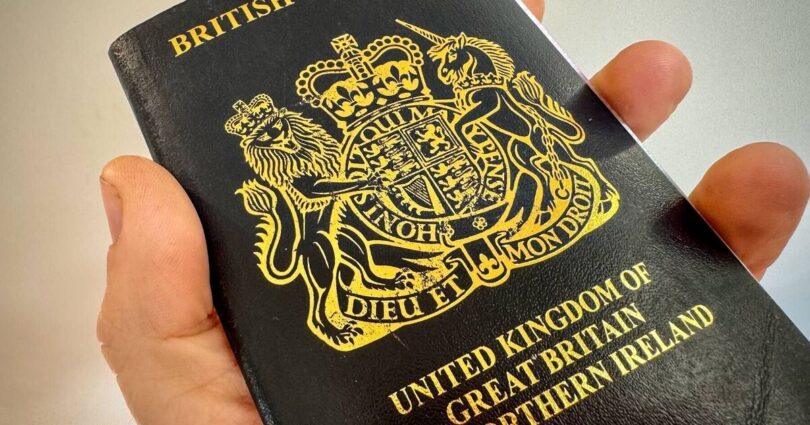
BATH, UNITED KINGDOM – OCTOBER 26: A man holds a post-Brexit United Kingdom issued passport on October 26, 2023 near Bath, England. Since leaving the European Union, the British passport is now a non-EU passport with a blue cover and a gold Royal crest. (Photo by Matt Cardy/Getty Images) (Image: Getty Images)
Passport costs across the board are set to rise substantially from next month following confirmation of proposed plans by the Home Office.
The Home Office has put forward an 8 per cent hike in UK passport prices, potentially pushing the cost of an adult passport beyond £100 for the first time. Children’s and pensioners’ passports will also see price increases, with the changes due to take effect from Wednesday, 8 April.
The Home Office stated it aims to « move towards a system that meets its costs through those who use it, reducing reliance on funding from general taxation ». The fee rises remain subject to Parliamentary approval.
The Home Office said in a statement: « The new fees will help the Home Office to continue to move towards a system that meets its costs through those who use it, reducing reliance on funding from general taxation.
« The Government does not make any profit from the cost of passport applications. The fees contribute to the cost of processing passport applications, consular support overseas, including for lost or stolen passports, and the cost of processing British citizens at UK borders. »

Cost of UK passport to exceed £100 for first time (Image: Getty)
How much is an adult passport?
From April 8, the price of a UK adult passport for standard online applications will increase from £94.50 to £102. Postal passport applications, meanwhile, could jump from £107 to £115.50 for adults.
How much is a passport for children?
The standard fee for a child’s passport, for online applications, could rise from £61.50 to £66.50, whilst a postal application could increase from £74 to £80 for children.
What is the cost of a pensioner’s passport?
A standard, 32-page concessionary passport is available free of charge for those who were born on or before 2 September 1929 and at the time of their application, hold any British nationality.

Couple passing security gate at the airport (Image: Westend61 via Getty Images)
The government stated: « Customers who naturalised or registered as British nationals will still qualify regardless when they naturalised or registered. »
Whilst the passport is free, there may be some delivery charges to return the passport or to send any supporting documents.
Will next-day services see a price hike?
Although it’s always recommended to apply for a new or replacement passport as early as possible, a next-day premium service is available in the UK. However, the new fees from 8 April could see this increase from £222 to £239.50.
What will be the cost of UK passports for overseas applicants?
Those applying from abroad for a UK passport online can anticipate a rise from £108 to £116.50 for adults and from £70 to £75.50 for children. Meanwhile, overseas paper applications will increase from £120.50 to £130 for adults and from £82.50 to £89 for children.
The last time the price of a UK passport increased was on April 10, 2025, when they rose by approximately 7 per cent. An adult passport jumped from £88.50 to £94.50, whilst a child’s online application increased from £57.50 to £61.50.
Prior to 2025, rises occurred in April 2024 and February 2023. The 2023 price hike marked the first increase in five years.
The government has recommended that those requiring a new passport should submit their application in good time, as the renewal procedure can take up to three weeks within the UK or potentially longer during busy travel seasons. For further details or to submit an application for a new or replacement UK passport, visit the government website.
Source link