
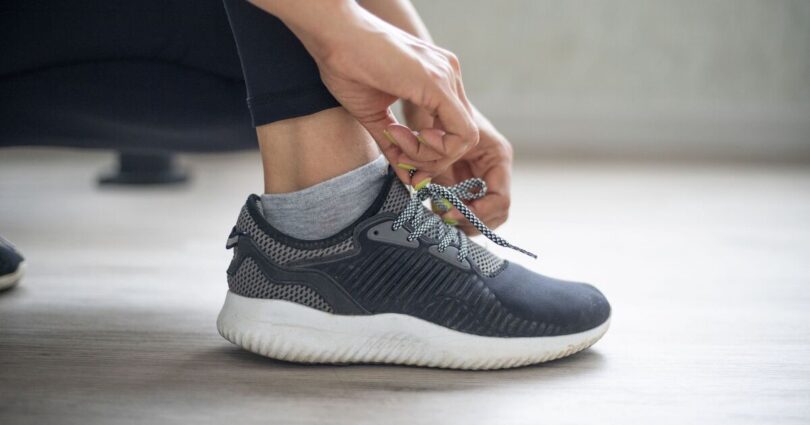
The expert revealed that bad smells are not a cleanliness problem (Image: Getty)
An expert has revealed the bizarre spot where you should keep your trainers. While many people think the solution to getting rid of the stubborn smell from their favourite pair of trainers is just airing them out, unfortunately, no matter how many times they are aired out, it won’t help. You can invest in expensive sprays that are made particularly to try and tackle the issue. However, the chemicals in those products can damage the materials in your shoes.
Though there is another option, according to Leanna Spektor, Co-Founder and Style Expert at Brand House Direct, an Australian online retailer that specialises in footwear. According to Ms Spektor, all you need to do is pop them in the freezer.
READ MORE: Expert issues warning to anyone with leather boots
READ MORE: Shoes will last longer and look better if ‘never’ kept in one part of home
But before anything, it’ll be worth knowing what causes the musky smell. The expert reveals that it is a bacterial issue, not a cleanliness issue. She explains that the inside of a trainer is the perfect environment for bacteria to thrive.
She added: “It’s warm, it’s dark, and after a workout or a long day on your feet, it’s damp. That combination is what produces the smell. It’s the bacteria breaking down sweat, not the sweat itself.”
Bacteria multiply quickly in these conditions, clinging themselves into the fabric and foam lining of your shoes. Your feet also contain around 250,000 sweat glands, more than anywhere else on the body, producing roughly half a pint of moisture each day.
A large amount of that then ends up inside your trainers, giving bacteria everything they need to thrive. That’s why just leaving trainers by an open window rarely does much; the bacteria are still there and very much alive.

Trainers can be put in the freezer overnight (Image: Getty)
But this is where the freezer comes in. Extremely cold temperatures kill the bacteria that cause the smell, unlike other methods that just mask the odour.
Ms Spektor said: “Freezing your trainers exposes those bacteria to conditions they can’t survive.
“It’s a much more thorough solution than sprays, which often just cover the smell temporarily. And unlike bleach, the cold won’t discolour or degrade the materials.”
She added that 12 hours at freezer temperature is enough to do the job, and what you end up with is a pair of trainers that will smell fresh without using any harsh chemicals.
Not only that, but it is cost-effective, barely takes up any time, and works on every type of trainer, including canvas, mesh, leather and suede.
To take complete advantage of the hack, the first thing you want to do is clean them, making sure to remove excess dirt and wiping them down.
You should also take out any removable insoles, if possible, as they harbour a large amount of bacteria.
Then put each shoe in a sealed freezer bag to protect the trainers from moisture inside the freezer, and keep your food well away from the footwear. Then you want to freeze them overnight for around 12 hours.
Once the time is up, take them out of the freezer to allow them to come back to room temperature naturally before wearing them – around 30 minutes to an hour at room temperature would be ideal.
Leanna Spektor, Co-Founder & Style Expert at Brand House Direct, concluded: “The freezer trick is one of those solutions that sounds too simple to work, but the science backs it up. Bacteria can’t survive in freezing temperatures, so you’re solving the problem rather than masking it.
“What I always tell people is to avoid reaching straight for bleach or strong chemicals when their trainers start to smell. These can break down the adhesives holding your shoe together, strip colour from the upper, and degrade the foam cushioning over time. You end up with fresh-smelling trainers that are structurally worse off.
She added: “For an extra boost, sprinkle a little baking soda inside each trainer before sealing the freezer bags. It absorbs any remaining odour while the cold does its work.
« And one final thing, always make sure your trainers are completely dry before putting them back on. Wearing damp shoes is how the bacteria problem starts all over again.”
Source link