
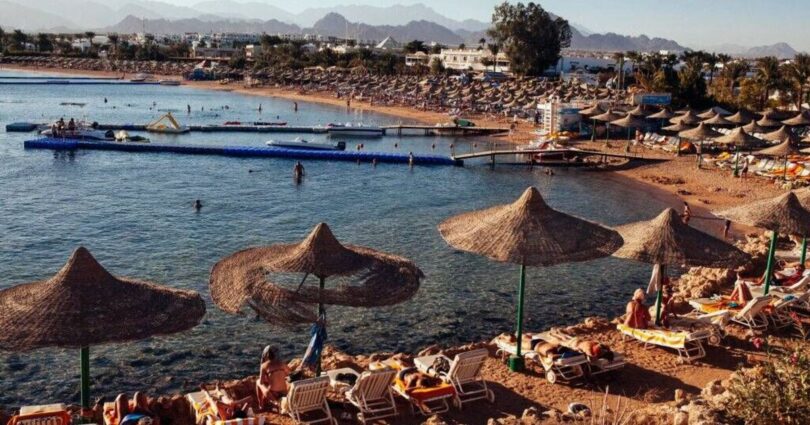
SHARM EL SHEIKH, EGYPT – OCTOBER 26: People relax on beach chairs at a beach popular with tourists on October 26, 2013 in the Red Sea resort town of Sharm El Sheikh, Egypt. Sharm el-Sheikh, lying on the Red Sea coast in Egypt’s South Sinai governorate, is one of Egypt’s most popular destinations for tourists. Egypt’s tourist industry has struggled since a popular uprising overthrew President Hosni Mubarak in early 2011, and tourist numbers have taken a further dive since the Egyptian Military’s overthrow of the country’s first democratically elected President, Mohammed Morsi in July 2013. Sharm el-Sheikh, popular for its beachfront resorts and water sports including SCUBA diving, has faired better than some other tourist spots in Egypt, with major hotels reporting roughly 20% occupancy during the resort’s busy summer season. (Photo by Ed Giles/Getty Images). (Image: Getty Images)
The Foreign Office has revised its travel guidance for several destinations including Turkey, Cyprus and Egypt amid the turmoil of the Middle East conflict, following US-Israeli strikes on Iran.
Whilst at the time of writing the UK government isn’t advising against travel to all of these destinations, it has updated its advice around « regional tension » and potential escalations in the regions. For Britons with travel plans already arranged, as there isn’t a blanket advisory against travel to these countries, holidays and flights can theoretically proceed as scheduled.
Should you be due to travel in the coming weeks but feel uncomfortable doing so because of the ongoing conflict, several options are available. Whilst it’s improbable you’ll be able to cancel and receive a complete refund, contact your tour operator or airline, as they may permit you to reschedule your trip to a later date without imposing a fee.
Should a company cancel your holiday or flight, the situation differs; in this instance, you are entitled to a complete refund. You may be presented with rebooking alternatives which you can accept, but if you’d prefer to reclaim your money then you are entitled to do so.
The same applies should the Foreign Office issue a ‘do not travel’ warning, as it has done with the UAE. In this scenario, firms and airlines must cancel your trip and provide you with a full refund. Should you attempt to travel against Foreign Office advice, your travel insurance will be invalidated. It’s important to note that airlines and holiday operators are currently giving priority to customers whose travel is scheduled within the next fortnight – if your journey is several months away, you may be requested to make contact again nearer the time.

AKROTIRI, CYPRUS – MARCH 2: The entrance of RAF Akrotiri pictured on March 2, 2026 in Akrotiri, Cyprus. An Iranian-made drone crashed into the RAF Akrotiri base in Cyprus early Monday morning causing minimal damage and no injuries. This strike followed Prime Minister Sir Keir Starmer’s decision to let the US use British bases for defensive operations against Iran. Cypriot President Nikos Christodoulides clarified that Cyprus itself is not involved in the military conflict. (Photo by Alexis Mitas/Getty Images) (Image: Getty Images)
Check out the latest travel advice for Cyprus, Turkey and Egypt below.
Cyprus travel advice
At present, the Foreign Office doesn’t advise Brits against travel to Cyprus, with most holidays and flights currently going ahead. However, the UK government has warned of a suspected drone strike at the RAF Akrotiri base that took place on March 2.
« British nationals in the Sovereign Base Areas should follow instructions from the Sovereign Base Areas Administration British Bases Cyprus Facebook. British nationals in the Republic of Cyprus should follow any instructions from Cypriot local authorities, » the guidance reads.
Authorities have also updated advice to warn of the « regional escalation » in the area. « Regional escalation poses significant security risks and has led to travel disruption, » it states, adding:
« British nationals should:
- « read If you’re affected by a crisis abroad – GOV.UK. This includes guidance on “how to prepare for a crisis” with suggestions on what you might include in your emergency supplies and “what to do in a crisis”
- « sign up to FCDO Travel Advice email alerts
- « monitor local and international media for the latest information
- « sign up to local information alerts/resources and follow the instructions of the local authorities
- « keep your departure plans under review, and ensure your travel documents are up to date. »
Turkey travel advice
At present, the Foreign Office doesn’t advise Brits against travel to Turkey in general, with most holidays and flights currently going ahead. There is a ‘do not travel’ warning within 10km of Turkey’s border with Syria « due to fighting and a heightened risk of terrorism », but this was in place before the Middle East conflict. Similar to Cyprus, the guidance has been refreshed to alert travellers to the « regional escalation » affecting the region. « Regional escalation poses significant security risks and has led to travel disruption, » it states, adding:
« British nationals should:
- « read If you’re affected by a crisis abroad – GOV.UK. This includes guidance on “how to prepare for a crisis” with suggestions on what you might include in your emergency supplies and “what to do in a crisis”
- « sign up to FCDO Travel Advice email alerts
- « monitor local and international media for the latest information
- « sign up to local information alerts/resources and follow the instructions of the local authorities
- « keep your departure plans under review, and ensure your travel documents are up to date. »

TOPSHOT – A plume of smoke rises from the site of an Israeli airstrike in the southern suburbs of Beirut’s Haret Hreik neighborhood on March 4, 2026. Israel launched fresh strikes on Iran and Lebanon, where state media reported a residential building was hit on March 4, as Iran’s Guards said they had sealed off one of the world’s most vital shipping routes for energy. (Photo by IBRAHIM AMRO / AFP via Getty Images) (Image: AFP via Getty Images)
Egypt travel advice
The Foreign Office has revised its Egypt travel guidance to caution Britons about « a heightened risk of regional tension » in the wake of the Middle East conflict. Its most recent advice notes: « There is a heightened risk of regional tension. Escalation could lead to travel disruption and other unanticipated impacts.
« British nationals should take sensible precautions, considering their own individual circumstances. These include:
sign up to FCDO Travel Advice email alerts
monitor local and international media for the latest information
sign up to local information alerts/resources and follow the instructions of the local authorities
stay away from areas around security or military facilities. »
At present, it doesn’t advise against all travel to Egypt, though it does caution against visiting specific areas of the nation.
It’s important to note these warnings are unconnected to the Middle East conflict, and were previously established. These include advising against all but essential travel to the Egypt-Libya border, North Sinai, the northern section of South Sinai, and the eastern section of Ismailiyah Governorate. There is also guidance against travelling to the Western Desert including the area west of the Nile Valley and Nile Delta Regions, although there are some exceptions such as Luxor and Valley of the Kings (check the Egypt travel advice for full details).
Source link