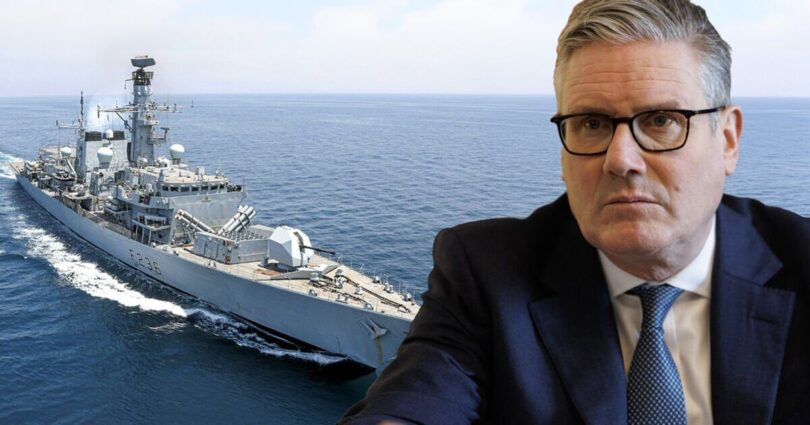
Defence chiefs are planning to send a Royal Navy Type 45 destroyer to the Middle East to defend a UK military base in Cyprus. The decision, taken after a drone struck RAF Akrotiri on Monday morning, addresses the lack of ballistic missile defence on the island but begs one question: why was this not done earlier?
Trump directed his “beautiful armada” to set sail for Iran in January, promising to do exactly what he has done if Tehran failed to “make a deal”. In military circles, planning always identifies a most likely course of action and a most dangerous course of action ahead of any operation. Arguably, as military chiefs considered the potential for US military action, the most likely and most dangerous course of action was retaliatory strikes against Western assets in the region. The Royal Navy currently has six Type 45 destroyers, three of which are in deep maintenance.
Of the remaining three, HMS Dauntless and HMS Dragon are currently undergoing minor maintenance according to a defence source, but remain on paper at least, on three days notice to move. HMS Duncan had been the Type 45 destroyer considered the most likely to be deployed, having recently completed a training exercise on drone interception.
However, Sir Keir Starmer confirmed that HMS Dragon would be deployed, again raising questions about the urgency of the operation given the vessel’s readiness state.
Armed with anti-air and anti-sea missiles as well as a range of other weaponry, it is more than capable of downing Iranian drones and would have done so on Monday morning. The failure to do so in favour of keeping HMS Duncan exercising in UK waters off the coast of Wales shows the fragility of the nation’s naval resources. Of course, this wouldn’t be an issue if Keir Starmer and Rachel Reeves had budgeted to keep more ships in service.
The UK military tends to operate in threes. When one asset is in the fight, another should be in support and a third in reserve.
An inability to deploy and maintain a credible support ship and reserve potentially underpinned the decision not to deploy either ship in advance of the US operation, but that is an extraordinary gamble given Trump’s history of impulsive military operations and Tehran’s track record of striking back indiscriminately.
Perhaps in the minds of military planners was the inherent risk of deploying a crucial asset when you have little else in reserve, given it leaves you short should it be damaged or denied.
Had British service personnel or their families been killed in Monday’s attack, there would be serious questions asked of naval officers, ministers and intelligence bosses. Luckily, the decision to send HMS Dragon late rather than never simply looks negligent.
Source link