
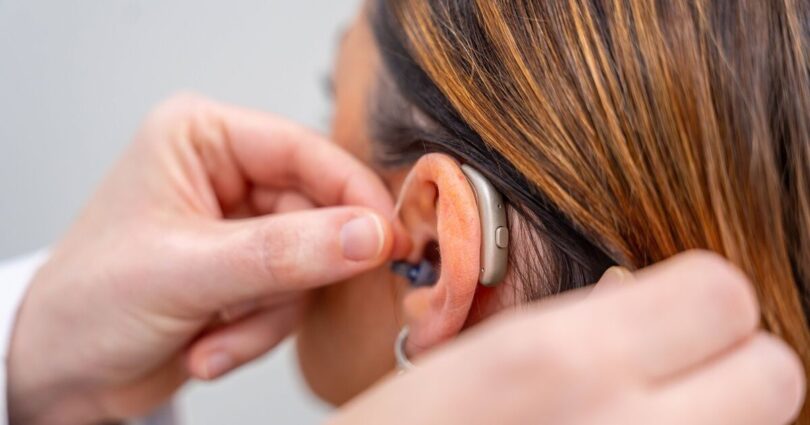
Dr Sooj explored two main types of hearing loss and what they mean (stock image) (Image: Iparraguirre Recio via Getty Images)
A medical professional has highlighted several indicators of hearing loss and a 72-hour ‘medical emergency’ that requires urgent attention. Dr Suraj Kukadia, known as Dr Sooj, used TikTok to share his expertise, explaining the crucial distinction between reversible and permanent issues.
« If you want to protect your hearing, you need to know this red flag for hearing loss, » Dr Sooj told his followers. « Now, there are two main types of hearing loss. There’s conductive, and there’s sensorineural. And the difference really does matter. »
Initially, Dr Sooj discussed conductive hearing loss, which occurs when sound cannot reach the inner ear through the outer or middle ear. Common causes include earwax buildup, infections, and fluid accumulation behind the eardrum, amongst other problems that are frequently treatable, which means hearing can recover.
Conversely, sensorineural hearing loss refers to damage to the inner ear or auditory nerve, usually resulting from noise exposure, medications, tumours, or age-related factors. These conditions are considered permanent but can be managed with hearing aids or cochlear implants.
However, if sensorineural hearing loss occurs suddenly and rapidly over hours to days, it is deemed a medical emergency. Dr Sooj claimed that most patients have a 72-hour window to start treatment in order to preserve their hearing.

Sensoerineural hearing loss is generally deemed irreversible but can be managed with hearing aids or cochlear implants (stock image) (Image: bymuratdeniz via Getty Images)
Beyond that timeframe, the prognosis is considered ‘much worse’. In his video, Dr Sooj continued: « And you can tell which type you have by humming. This is my left side, this is my right side. If we close both ears with fingers and hum like this, where do you hear the hum loudest?
« If my left side is affected and the hum is louder in this ear, the one with the hearing loss, then that suggests a conductive hearing loss. The sound is trapped in the ear canal and in the middle ear, so conduction of sound waves through the bones is enhanced and feels louder.
« If the hum is louder in your good ear, so the one that is not affected by the hearing loss, then that suggests some sort of sensory neural hearing loss in the affected ear. Your inner ear or nerve on the affected side is damaged, so it can’t process sound properly, even when it’s conducted through bone.
« Now, if the hum is equal in both ears, but you’re still struggling to hear, then you might have an issue affecting both ears, or something else entirely might be going on. »
Additionally, Dr Sooj highlighted five crucial warning signs that require urgent assessment. These include the following:
- Sudden hearing loss in one or both ears
- Hearing loss with dizziness or vertigo
- Hearing loss with a severe headache
- Hearing loss after a head injury
- Hearing loss with facial weakness
He added: « For gradual hearing loss, you should still get assessed, but it’s less urgent. You should see your GP, who can examine your ears, remove wax if needed, and refer you to audiology for proper hearing tests. »
Similarly, official advice from the NHS advises: « There are lots of possible causes of hearing loss. It may be caused by something treatable or it may be permanent. Your symptoms may give you an idea what could be causing it. But do not self-diagnose, see a GP for advice. »
For more information, visit the NHS website here.
Ensure our latest headlines always appear at the top of your Google Search by making us a Preferred Source.
Click here to activate or add us as your Preferred Source in your Google search settings.
Source link