
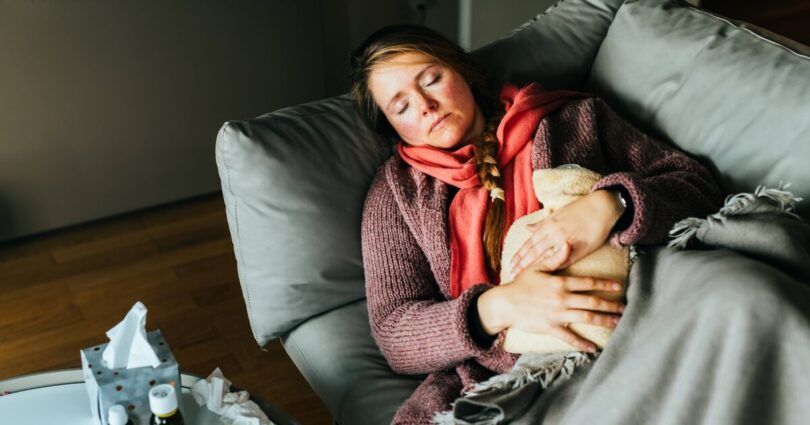
The NHS and WHO name the same minimum temperature (Image: Guido Mieth via Getty Images)
It’s expensive to keep homes warm and energy bills are only getting worse, but there are compelling health reasons to keep the heating on. Feeling cold isn’t merely unpleasant — the temperature of our homes directly impacts our overall wellbeing.
With cold, flu, norovirus and Covid circulating, winter illnesses are widespread and a challenge to avoid. Whilst handwashing is widely recognised as one of the most effective ways to protect yourself, health experts agree that staying warm helps us stay well.
Allowing your home to become too cold can result in illness, according to NHS Inform. In cold environments, our hearts must work harder to maintain body temperature, which causes blood pressure to go up. Cold air can aggravate the lungs and cause joints to feel stiff and painful.
Read more: UK drivers urged to ‘pay attention’ when they start the car this month
Read more: Safety alert over popular home appliance due to ‘serious risk of fire’
The minimum temperature to heat homes for your health
So, what temperature is most effective at warding off illness? Guidance from the NHS, UK Health Security Agency (UKHSA) and the World Health Organization (WHO) all recommend the same minimum temperature — 18C.
The WHO’s Housing and health guidelines state: « Indoor housing temperatures should be high enough to protect residents from the harmful health effects of cold. For countries with temperate or colder climates, 18°C has been proposed as a safe and well-balanced indoor temperature to protect the health of general populations during cold seasons. »
This recommendation is supported by the UKHSA’s guidance for staying healthy in winter. The agency advises: « Our top tip is to heat the home, or the parts of it you’re using, to at least 18°C.
« This is the temperature at which we start to see changes in the body, when the blood starts to thicken. So, temperatures above this are best to protect your health. »

Experts generally agree on the minimum temperature it should be indoors (Image: Nickbeer via Getty Images)
However, it’s worth noting that the thermostat should be set even higher for those who are more susceptible to the cold. As per NHS Inform, « Anyone can become unwell when the weather is cold. However, some people are more at risk. »
Some of the groups more at risk include:
- People aged 65 or over
- People with underlying health conditions, like heart or lung conditions or mental health conditions
- Children (particularly aged five and under)
- Pregnant women
- People who are housebound or have low mobility
Public Health Wales recommends a higher temperature of 23C for these groups: « For those households with vulnerable people, the recommendations are 23°C in the living room and 18°C in other rooms achieved for 16 hours in a 24-hour period. »
Does being cold make you sick?
While the cold itself doesn’t cause illness, it does create conditions that promote illness. For example, viruses thrive in cold environments.
Studies have shown that the viruses responsible for flu and Covid survive longer in cold and dry conditions, thus increasing their chances of infecting people.
« Cold temperatures themselves do not cause infections, » clarified Manal Mohammed, a Senior Lecturer in Medical Microbiology at the University of Westminster in The Conversation.
« Instead, they influence a combination of biological, environmental and social factors that make people more vulnerable to respiratory illnesses, especially during the winter months. »
As the UKHSA pointed out, being cold also compromises our bodies’ ability to combat illness: « Being cold also affects our body’s ability to fight off infection. This is why in the weeks after the cold weather we see more deaths from infections like pneumonia, as lung conditions and coughs can develop into a more serious problem. »
Source link