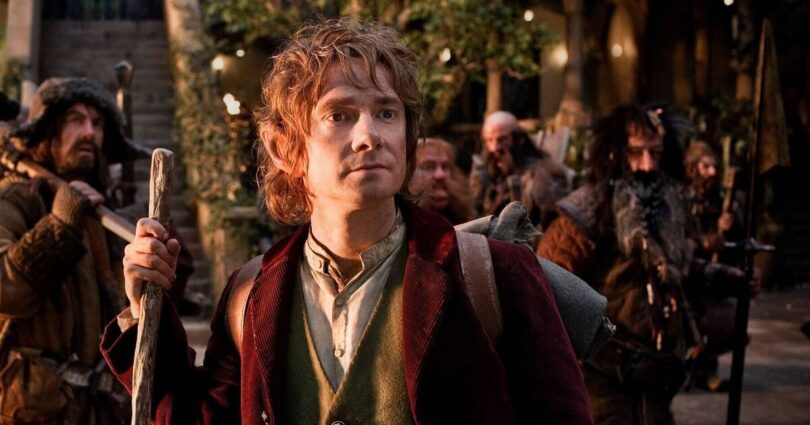
Martin Freeman in The Hobbit trilogy (Image: undefined)
As many as 27 animals died on a « death trap » farm used to house livestock during the filming of The Hobbit.
Animal handlers working on the film trilogy claimed the production company was responsible for the fatalities ahead of the film’s release in 2012.
The specialists said the string of deaths were mainly due to the dangerous conditions of the New Zealand farm where they were housed. These included sheer drops, sinkholes and broken fencing.
Animal handler Chris Langridge revealed he was brought on as a horse trainer in November 2010, overseeing around 50 horses, but was immediately concerned that the farm was littered with « death traps. »
He explained he tried to fill some of the sinkholes, caused by underground streams, and even provided his own barriers to stop the horses from reaching the most treacherous areas. Ultimately, he said, it proved an impossible task, reports the Mirror.
READ MORE: Nan shot dead in own home by killer who is convicted paedophile
READ MORE: Teenage boys ‘laughed’ as they raped ‘petrified’ girl, 15, in 90-minute ordeal

The Hobbit star Martin Freeman rides one of the animals used in the film (Image: filmstills)
The production company at the time acknowledged they were aware of the death of animals, although did emphasise some of these died through natural causes.
A spokesman also maintained as soon as they were aware of problems they took measures to ensure it never happened again.
The first horse to die, Chris said, was a miniature called Rainbow. « When I arrived at work in the morning, the pony was still alive but his back was broken. He’d come off a bank at speed and crash-landed, » Langridge explaine.
He was in a bad state. » Rainbow, who had been earmarked for use as a hobbit horse, had to be put down. A week later, a horse called Doofus became tangled in fencing and suffered a severe leg wound. Whilst that horse survived, Langridge said he’d had enough and resigned from his position.
Following his departure, wrangler Johnny Smythe said a horse named Claire was found dead, its head submerged in a stream after tumbling over a bluff. In the wake of that incident, he said, the horses were moved to stables, where a third horse also perished.

One animal handler quit due to the conditions (Image: undefined)
Smythe said no post-mortem was conducted on the horse, which was named Zeppelin. Veterinary records indicate the horse died of natural causes, from a burst blood vessel, but Smythe said the horse was bloated and its intestines were filled with a yellow liquid; he believes it died of digestive complications caused by new feed.
Smythe said the six goats and six sheep he buried died after tumbling into sinkholes, contracting worms or receiving new feed after the grass was consumed.
He said the chickens were frequently left out of their enclosure and that a dozen were mauled to death by dogs on two separate occasions. Smythe said he was sacked in October 2011 after arguing with his boss about the treatment of the animals.
The American Humane Association, which oversees animal welfare on film productions, insists no animals were harmed during actual filming in New Zealand.
Nevertheless, it also recognised the handlers’ accounts and the shortcomings in its monitoring system, which supervises film sets but not the premises where animals were kept and trained.
Don’t miss: Hollywood legend dies after decades long battle with tragic illness
Don’t miss: Former footballer dies aged 46 after going for lie down feeling unwell
A spokesman for trilogy director Peter Jackson confirmed horses, goats, chickens and one sheep died at the farm near Wellington where roughly 150 animals were accommodated for the films, though he said some deaths occurred from natural causes.
The spokesman, Matt Dravitzki, said the deaths of two horses could have been prevented, and added the production company moved quickly to improve conditions following their deaths.
Langridge and his wife, Lynn, who was also working as a wrangler, resigned in February 2011. The following month, they sent an email to Brigitte Yorke, the Hobbit trilogy’s unit production manager, outlining their concerns.
Chris Langridge said he responded to Yorke’s request for further information but never received a reply after that.
Dravitzki, the spokesman for Peter Jackson, said the production company acted promptly after the first two horses died, investing hundreds of thousands of dollars upgrading accommodation and stable facilities in early 2011.
« We do know those deaths were avoidable and we took steps to make sure it didn’t happen again, » he said.
He revealed the company no longer leases the farm and has no animals left on the premises. He stated he wasn’t sure whether livestock would be needed for future filming in the trilogy, but pointed out that Jackson himself adopted three of the pigs that were utilised.
Source link