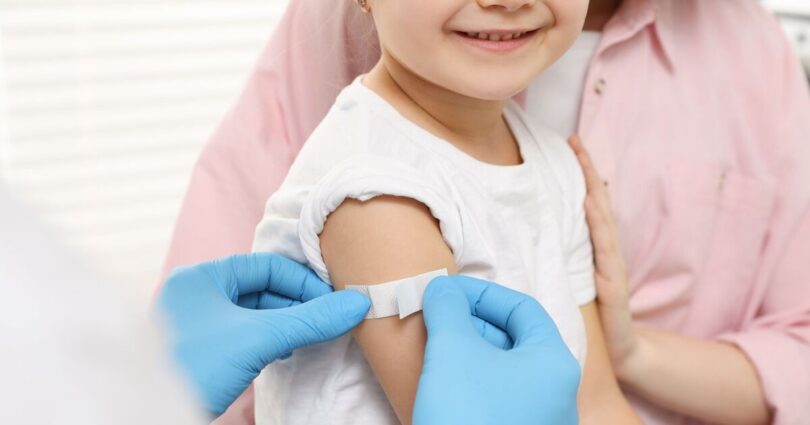
A NHS GP has urged more parents to think twice before refusing to vaccinate kids (stock image) (Image: Getty)
Whenever a child is born, their parents have the option of choosing whether or not to get them vaccinated against a range of diseases. While these vaccines aren’t manditory, they are strongly encouraged and highly recommended for public health, with specific requirements for some healthcare staff.
However, since 2022, no childhood vaccine in the UK has met the World Health Organisation‘s target of being given to 95 per cent of children, which ensures protection of vulnerable people. As a result, cases of measles and other preventable diseases have increased. There are a range of reasons for this, including safety worries, lack of trust in institutions or healthcare, or religious or philosophical beliefs, such as « natural immunity ».
READ MORE: Pandemic warning as disease expert names three viruses ‘poised’ for 2026
READ MORE: NHS breakthrough as it offers chickenpox vaccines for the first time
Some parents have also claimed they’ve found it difficult to get a GP appointment to get the vaccines, according to a BBC report. Now, one NHS GP has urged more parents to get their kids vaccinated, as she shared data about how low vaccinations numbers have caused outbreaks of preventable diseases.
« Every parent wants to keep their child safe, » Dr Bhasha Mukherjee wrote in the caption of the post. « But here’s what data shows about the actual risks today. »
She went on to explain that several vaccine‑preventable diseases are on the rising because fewer children are fully vaccinated. She said: « This isn’t hypothetical — it’s happening now. »
In the UK confirmed cases of measles shot up to almost 3,000 in 2024 — a dramatic rise from from just 367 in 2023 — mostly in unvaccinated children. This is the highest number of cases recorded annually since 2012. The majority of these patients were children between the ages of one and four, and between five and 10, with 710 and 730 cases respectively, according to the UK Health Security Agency.
Dr Mukherjee went on to write: « Global estimates show more than 10 million measles cases in 2023, a 20 per cent increase compared to 2022, linked directly to drops in routine vaccination coverage. »
Meanwhile, Pertussis, better known as whooping cough, has also increased. In England alone, there were more than 14,000 lab‑confirmed cases in 2024, including hundreds in infants aged less than three months — the age group at highest risk of severe disease. Multiple deaths from the condition were also recorded.
Other vaccine-preventable diseases such as polio are also re‑emerging in parts of the world where vaccines aren’t reaching children. While many parents claim vaccines can make their children ill, Dr Mukherjee reminded people that diseases such as measels can be extremely serious.
« They can lead to pneumonia, encephalitis, hearing loss, long‑term disability, or death, » she explained. « Vaccines aren’t perfect, but high coverage prevents spread and protects the whole community, especially infants and immunocompromised children. »
In the UK, the number of children with the MMR (measles, mumps, and rubella) vaccine was at 88.9 per cent as of 2023-24 data. This is well below the 95 per cent needed to prevent outbreaks of the diseases.
This gap is driving disease resurgence, according to Dr Mukherjee. At the end of her post, she said: « Bottom line: Choosing not to vaccinate increases your child’s risk of catching real, rising threats — and contributes to outbreaks that put many other children at risk too. »
Source link