
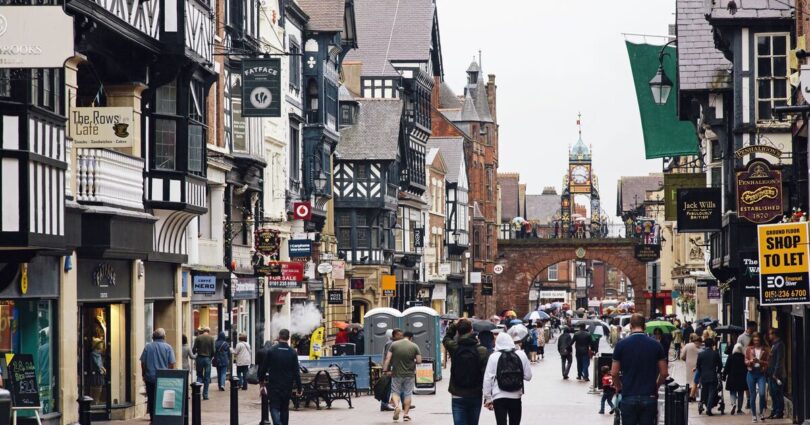
Major high street retailer River Island will close 18 stores by the end of January as part of a major restructure. The chain has already closed nine stores this month, and another six will shut forever on January 24, followed by 12 closures on January 31. Like many other high street chains, it attributed the closures to changing customer habits combined with high running costs. River Island’s CEO, Ben Lewis, said that while the fashion brand is « much loved » in the UK, a « large portfolio of stores no longer aligned to our customers’ needs ».
Last year, the struggling high street retailer announced major cuts and its accounts revealed a £32.3million pre-tax loss after sales dropped 19%. Mr Lewis said: « We have a clear transformation strategy to ensure the long-term viability of the business, and this decision gives us a strong platform to deliver this.
« Recent improvements in our fashion offer and shopping experience are starting to show results, and the restructuring plan will enable us to align our store estate to our customers’ needs.
« We are grateful to our suppliers, landlords and other stakeholders for their constructive engagement and shared confidence in River Island’s future. »
When closures were first announced last year, around 110 of the approximately 950 roles at River Island’s head office were reportedly made redundant, saving an estimated £8.1million.
Several River Island branches have already closed. Brighton, Edinburgh, Great Yarmouth, and Stockton-on-Tees shut their doors at the end of last year.
The fashion giant is far from the only retailer to announce closures. Several brands have retreated from the high street, including major banks, clothing brands, and discount stores such as Poundland.
It comes after Rachel Reeves announced in the last Budget that the minimum wage would increase, as it typically does every year, and that employers would have to contribute a higher rate of national insurance.
Last year, the high street saw more than 54 retailers go bust, resulting in the loss of 3,080 stores. Some 30,153 employees lost their jobs due to the cuts, according to the Centre for Retail Research.
Source link