
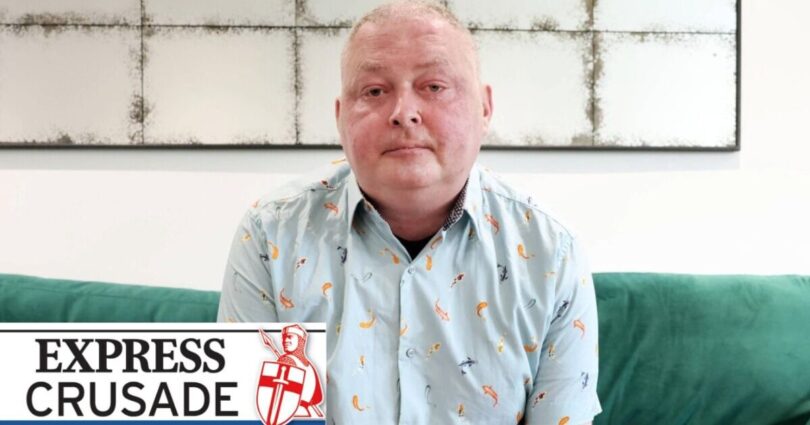
The only muscle I can confidently identify is the one served in a white wine, shallot, and garlic sauce, and that’s actually a mussel, so I’m as surprised as anyone to learn I’ve joined a gym. In the past, my gym membership consisted of doing a tour, being told to bring a towel, and not signing on the dotted line. This time is different, because I haven’t been told to bring a towel. I do bring a towel though even though I’m not sure where the changing rooms are. This time joining the gym seems to have started with the gateway drug that is physiotherapy sessions at my cancer hospital.
I used to go to them once a month for an hour and was given exercises to do with those thick stretchy bands you don’t know what to do with until you’re told what to do with them. And then one day the physiotherapist half-whispered to me that he was running gym sessions for cancer patients to help them improve their fitness and thought I could benefit from them.
I’ve shied away from gyms in the past because I haven’t wanted to be in a situation with lots of muscular men and me looking like a pudding.
But this idea of going to the gym works for me because the session is for six cancer patients with two physiotherapists on hand to devise exercise programmes, show how to use the machines, and make sure I’m not doing anything to make my hernia worse.
Where it doesn’t work for me is that it’s on a Wednesday. That’s my usual chemotherapy day and when that’s not happening I’m dealing with the side-effects of chemotherapy.
The programme is made up of six sessions per patient, with the option of paying for additional ones. And, so far, I’ve managed to attend 50% of my sessions.
The first week I was dealing with the kind of side-effect you wouldn’t want to experience while doing a leg press so I didn’t make it. The second week I made it, hurrah. The third week I’d requested that I only have chemotherapy sessions in the afternoons while I’m doing the exercise programme, but my treatment time was swapped from an 11am start (which would have given me just enough time to get from the gym to the hospital) to 9.30am.
Next week my chemotherapy is supposedly an 8.30am start, so I have my fingers crossed that it can be changed.
I’m not doing this as some kind of new year’s resolution but because I’ve lost so much muscle strength and stamina since starting cancer treatment in the summer of 2023.
A nurse once told me that I’d never get the level of fitness back that I had before being filled with chemotherapy and immunotherapy every fortnight. That may be true, and the drugs have given me unenviable conditions like osteoporosis, but I want to try and be as active as I can.
The one problem I have, apart from the big problem of incurable bowel cancer, is that going to the gym is dull. It’s really, really dull.
It’s more dull than the conversation some friends had, before I started life as a runner, after a Cardiff Marathon where they discussed what running shoes they had. It might even be more dull than the day a child has when their parents take them shopping for a new sofa.
I can understand now why it’s taken me so long to join a gym and why I favoured running outside, and dumbbells at home, when I was well.
Back then I’d train for a half marathon, do the race in an Eastern European country, have a shower, then have a nice weekend holiday.
Now I can understand why people are already considering abandoning their « go to the gym more » new year’s resolution. But for now I will persevere because it’s making me feel better about myself, and anything that has that effect is clearly a good thing.
Physical exercise definitely has a positive impact on someone’s mood, unless they lose 11-0 in a Sunday League football match, so could be something that cancer specialists recommend for their patients.
At the Daily Express we’ve been running a Cancer Care campaign for the past year to ensure that all cancer patients get access to mental health support both during and after treatment.
One barrier so far is cancer specialists not appreciating that this support doesn’t have to come in the form of a high-level psychology service, if that is not required.
I hope that this year they pledge to give their patients the support they need, and realise that things like a gym programme can be a part of this.
Source link