There are pretty villages and towns up and down the UK, but not all of them have a dark past like the coastal village of Happisburgh in Norfolk. The village is known for its natural beauty, archaeological sites, coastal erosion and beautiful beach walks, but in the 19th century, it was also the home of Jonathan Balls.
After his death in 1846, he was posthumously accused of poisoning at least 22 people, most of them family members, in the village from 1824 to 1845. Not much is known about Mr Balls’ life before he is alleged to have committed these crimes, but he was known as a “bad character” in the village who had previously been to prison for committing petty crimes.
Who was Jonathan Balls and what were his alleged crimes?
Mr Balls married a woman named Elizabeth at some point in his life and had three daughters, all of whom had children of their own later in life. The family was poor, and so they relied on a relief fund to get by. However, as Mr Balls grew older, he started to rely more on his family for financial support, which is alleged to have been the motivation behind fatally poisoning family members one by one so the money would go to him instead.
It’s believed that Mr Balls began buying large amounts of arsenic in the 1830s from nearby towns, claiming his home had a rodent infestation. The first suspicious death was of his daughter, Maria Lacey, at the age of 24, who is believed to have died of mistreatment by her husband and an unidentified illness.
A year later, on Christmas Day in 1836, Mr Balls’ granddaughter, 13-month-old Maria Green, died mysteriously. This was followed by Ann Peggs, aged 8, on June 7, 1839, 13-month-old Martha Green and her three-year-old brother, William, who both died on October 31, 1841. All three children were Mr Balls’ grandchildren.
In the following years, multiple members of Mr Balls’ family died in suspicious circumstances, including one of his children and one of his parents, both of whom died mysteriously after moving from their home to live with him.
The family’s neighbours asked for an inquest into the deaths to be held on two occasions, but an investigation did not take place. In September 1845, Mr Balls’ grandson, Samuel Green, died, followed by his sickly wife, Elizabeth, only four months later. The final confirmed victim is thought to be his granddaughter, Elizabeth Anne Pestle, who died on April 17, 1846.
Three days after Ms Pestle died, Mr Balls died at his home in Happisburgh after being struck down by an illness. After his death, locals asked the local coroner, Mr Pilgrim, to exhume the bodies and reexamine the cause of death. Mr Pilgrim eventually ordered the exhumations of Mr Balls’ and Ms Pestle’s bodies. The coroners found a large quantity of arsenic in both bodies, which led them to begin investigating the other family members. Mr Balls’ living relatives and and some of the family’s servants who were employed at the property were also interviewed. One maid, Sarah Kerrison, claimed she had seen Mr Balls sprinkling a mysterious white powder into a teacup, which he gave to his bedridden wife. Her illness gradually got worse, and she later died. When the maid tasted some of the food prepared at the home, she later fell ill and displayed symptoms of poisoning.
The case attracted widespread media attention at the time and was even discussed in Parliament.
The village of Happisburgh
While Happisburgh may have a checkered past, the village is well worth visiting if you’re in the Norfolk area. The coastal village is home to some of the UK’s earliest known human footprints, a significant archaeological find that placed early humans in Northern Europe. The footprints are thought to be the oldest human footprints in the UK, dating back 800,000 years.
The village’s rugged coastline has some beautiful walking trails, with the sandy beach remaining quiet throughout the year. It’s also dog-friendly throughout the year, making it the perfect spot for dog walkers who want to explore this rugged coastline. However, visitors walking along the cliffs or beach are advised to exercise caution due to the risk of coastal erosion. The cliffs are made of glacial till, which has led to the loss of land and cliffs in recent years
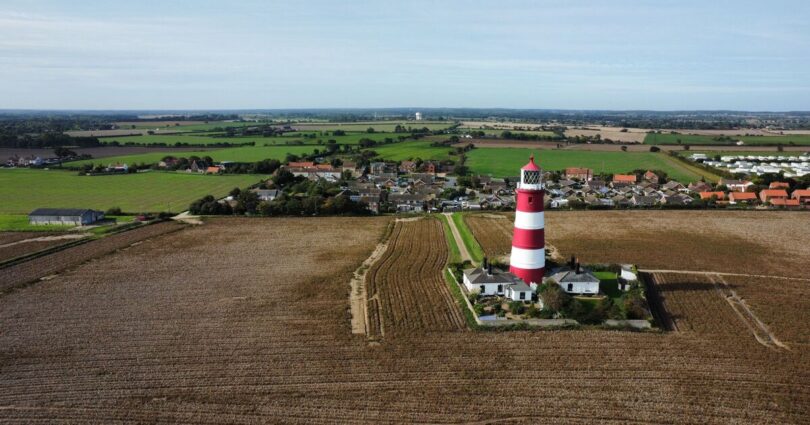
One of Happisburgh’s most iconic sites is Happisburgh Lighthouse, which dates back to 1790, making it East Anglia’s oldest working lighthouse. It’s also Britain’s only independently operated lighthouse, offering beautiful views of the coast at 85ft.
The Hill House Inn is a dog-friendly local pub offering classics such as fish and chips, along with a cosy feel and friendly atmosphere. The pub has a rating of 4.3 out of five on Google, with one reviewer claiming it’s the “kind of pub you dream of stumbling into on a windswept Norfolk day ».
The review, from Neil, said: “The Hill House Inn in Happisburgh is the kind of pub you dream of stumbling into on a windswept Norfolk day. Perched not far from the cliffs, it has that mix of cosy charm and a bit of history woven into the beams.
“Inside, it feels like the sort of place where smugglers probably once traded contraband rum under the table while pretending to just be ‘popping in for a pint’. The ale is well-kept, the food hearty, and the welcome as warm as the fire in winter.”
Another review from Patricia added: “My first time visiting the inn. A lovely, typical village pub. Dog-friendly, with friendly staff. Nice sandwich, I had ham on the bone, and my friend had salmon, with chips and salad plus two coffees. Reasonable price too.”
Alternatively, there’s also Smallsticks Cafe at Cart Gap Beach, which is slightly further along the coast from Happisburgh beach. The cafe serves everything from coffee, cake and sandwiches to fish and chips and a full English breakfast. The friendly, family-run café has a rating of 4.6 out of five on TripAdvisor, with reviewers commending the staff and the delicious food.
One reviewer said: “We ended up here five times during our week in Norfolk! It was simply outstanding and so fabulous! The menu was great, such a fabulous choice, and the hardest thing was choosing what to eat! The whitebait was awesome and absolutely delicious, and cooked to perfection! Food was well-presented and cooked perfectly! Staff were so warm and friendly and so polite and true ambassadors to the establishment!!! Prices were fantastic and certainly won’t dent a hole in your wallet! So doggy friendly and the toilets were spotless!”
Another person said: “Very welcoming and the coffee and cake we had were lovely. Very friendly staff and a very pleasant way to spend an hour. Didn’t eat the cooked food, but what we saw looked very nice.”
Source link