In San Miguel County, where Telluride is located, the average home is valued at $1.5 million, twice as much as it was in 2018, according to data from Zillow. And the average rent in Telluride is $8,000 a month, Zillow shows. While more affordable housing is available farther from the resort, commuting can be a challenge in severe winter weather and comes with added transportation costs, Daranyi said.
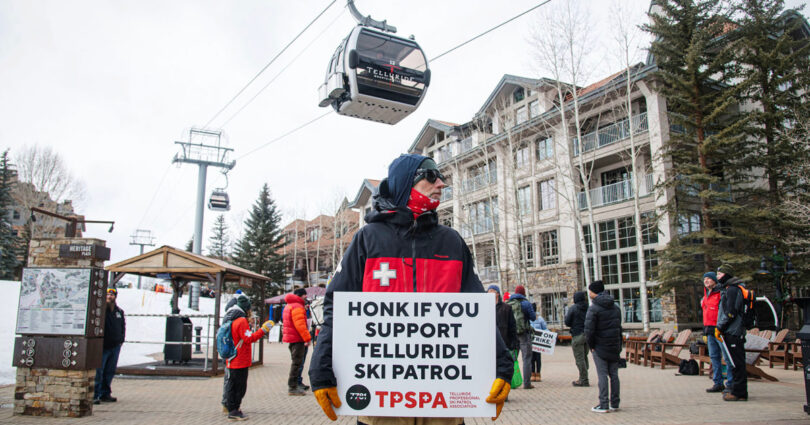
Representatives for Telluride and ski patrollers resumed talks over the weekend, but as of Tuesday had yet to reach a deal on the union’s contract, which expired over the summer. After closing for nine days, the resort opened one ski lift and the children’s ski area Monday.
A Telluride spokesperson didn’t respond to a request for comment. The latest update on the resort’s website said that “on January 3, Telluride had a productive and collaborative meeting with the Ski Patrol Union and we have revised our last offer, in an attempt to bridge the gap.”
The resort’s longtime owner, Chuck Horning, said in an email to local businesses that the resort will be forced to raise prices if the union gets its wage increase, according to media reports. A day pass to ski at Telluride currently costs around $245 for an adult, with an adult season pass running $2,200. Horning, a California entrepreneur and investor, has had an increasingly contentious relationship with the city of Telluride.
The union has been seeking median pay of $25.50 for new ski patrollers, up from the current $21.50, and $36 an hour for advanced ski patrollers, up from around $30 currently, according to the last proposal the union said it submitted before the strike.
The union said it had previously sought higher wages along with a $60 weekly health care stipend, since patrollers aren’t offered health insurance coverage, and additional money for equipment, but dropped those requests during earlier negotiations.
The resort said it has offered an average 13% wage increase for ski patrollers for this season and a 5% cost of living increase for the following two seasons. The ski patrollers union nearly unanimously rejected that offer.
Last year, a strike by ski patrollers at Park City Mountain Resort in Utah shut down most of the resort for 12 days. The two sides eventually reached an agreement, with the average ski patroller getting a $4-an-hour raise, according to the union.
Corlan Williamson, a ski patroller in Park City, said he now sees a longer-term future in the job. When he started working there five seasons ago, he was making $13.25 an hour, but is now up to around $30 an hour.
“It’s been a pretty big change for people, and definitely a sigh of relief,” said Williamson, who works as a lead specialist, responsible for the safety of a section of the mountain and supervising other patrollers. “The job requires a lot of skill and a lot of knowledge, and we were getting to a point where we were losing our experience. We’ve been able to build up that experience and knowledge again and retain people.”
Still, the job comes with economic uncertainty. Ski patrollers’ start and end dates can vary depending on the weather. This season, with less than average snowfall throughout Colorado and Utah, some patrollers who were planning to start in late November still haven’t been hired.
Health insurance is another variable. Some places, like those owned by Vail Resorts, the world’s largest ski resort operator, offer health insurance while ski patrollers are employed, but not in the offseason. Others, like Telluride, provide none.
“We still have some progress to be made, but the direction we’re moving in has made it feel a lot more realistic and possible for this to be a career,” Williamson said. “It’s not going to be the same life and the luxury that I would have if I was still an engineer in the oil and gas world, but I think there’s a lot of value, and it’s just a very rewarding career.”
At Keystone, Kelly said she thinks the strike in Park City helped pave the way for her union to secure its first contract a month later. Both Park City and Keystone are owned by Vail Resorts, which also has a partnership with Telluride.
Vail declined to comment on contract negotiations. In 2022, Vail increased its average hourly pay for its North American employees by 30%, including setting a $20 minimum wage.
Kelly said she hopes the push by ski patrollers can further lift the wages for other workers at the Keystone resort.
“I don’t think that ticket scanners or lift operators should struggle any more than we should just to get by,” she said. “It’s just become so unfeasible. I started working in Keystone in 2013 and it’s just gotten harder and harder.”