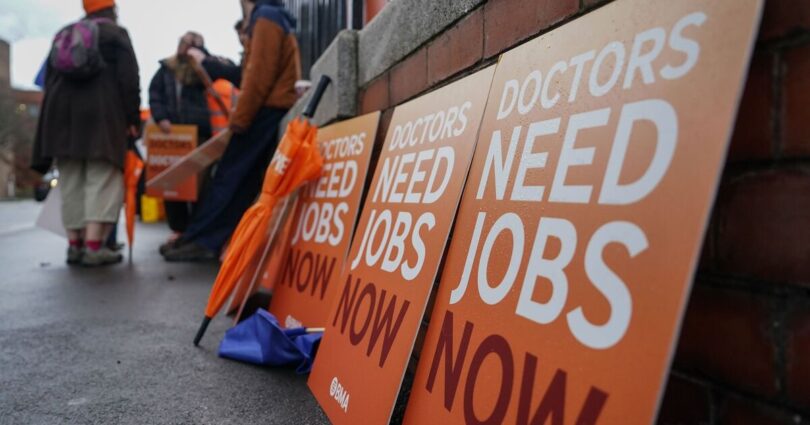
Resident doctors represent nearly half of all doctors working in the NHS and are downing tools in both emergency and non-urgent care, with senior doctors drafted in to provide cover.
The British Medical Association (BMA), which represents the doctors, says the strike is about more than pay alone. Doctors are calling for a long-term plan to increase pay and a guarantee of more specialty training places.
Speaking from a picket line outside St Thomas’ Hospital in London this week, BMA resident doctor leader Dr Jack Fletcher said: “We’re here yet again, on a picket line, because we have not yet reached a credible deal to fix this absurd jobs crisis.”
He rejected claims the union was demanding a huge immediate rise, saying: “What we’re not asking for is a huge stonking pay rise in one go.”
The Government argues it has already made concessions. Streeting said doctors have received pay rises totalling nearly 30 per cent over the past three years, and insists there is agreement on jobs but not on pay.
“These strikes will come at a cost of £250m and impact on operational pressures, on patients and on the whole NHS workforce,” he said.
The BMA does not agree and says that, despite recent increases, resident doctors’ pay remains around a fifth lower than in 2008 once inflation is taken into account.
Doctors also point to fierce competition for training roles, with 30,000 applicants chasing 10,000 specialty training jobs this year.
NHS England has said that GP practices will stay open and urgent care will still be available, but some disruption is to be expected, with emergency departments in some areas closing during the strike.
With patient care, pay fairness and NHS resilience all in the balance, the dispute has divided opinion.
Do you think junior doctors deserve a 26% pay rise this year? Vote in our poll and have your say.
Source link