It could only be a matter of time before the world’s luck runs out. (Image: Getty)
Nuclear apocalypse has only been a button-push away on several instances since the inception of the atomic age, but only a few times was it due to a war.
Human error, faulty technology and paranoia have led to many near misses since World War Two, ridiculing the concept of mutually assured destruction safeguarding the world. And just how close we came has often only been revealed years after the event.
Whether it was Vasili Arkhipov’s disagreement in a stifling submarine or Stanislav Petrov’s intuition against a glowing computer screen, the ‘fail-safes’ have failed more frequently than you’d imagine. The survival of modern civilisation has often hinged on the decisions of single individuals and the mercy of a malfunctioning computer.
These incidents serve as a reminder that as long as these weapons exist, our existence is not guaranteed. The transition from the Cold War to a multipolar world has only added layers of complexity to this hair-trigger reality.
Ultimately, these 11 stories act as a warning that, in the nuclear age, it could only be a matter of time before the world’s luck runs out…

Former Soviet Colonel Stanislav Petrov saved the world (Image: Scott Peterson/Getty Images)
1958: Taiwan Strait crisis
China bombarded offshore islands held by Taiwan. Some in Washington advocated for nuclear strikes to break a blockade and deter invasion. Cooler heads prevailed. Conventional force and diplomacy – not mushroom clouds – ended the crisis.
1962: The Cuban Missile Crisis
For 13 days, the US and the Soviet Union confronted each other over missiles in Cuba. It’s renowned – but the genuinely alarming element is what remained hidden. A Soviet submarine, B‐59, trapped by US depth charges, had a nuclear torpedo prepared to launch. It required one man, Vasili Arkhipov, to say ‘no’ to a strike. That solitary refusal may have prevented tens of millions of deaths.
A substantial solar flare disrupted US early‐warning radars and communications, exactly as an enemy assault might. Missile installations went on alert. Fortunately, Air Force space weather specialists determined the source in time, and instructions to escalate were stopped.

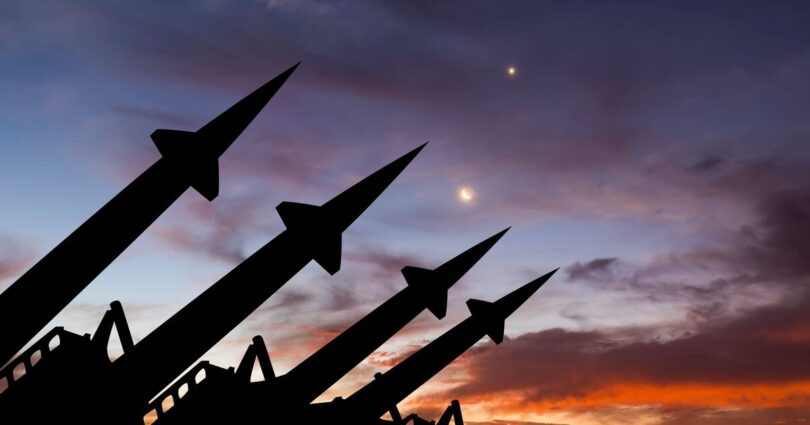
Missile were primed to launch (Image: Getty Images)
1969: The Sino‐Soviet border clashes
Firefights on a frozen river between China and the USSR spiralled into discussions of pre‐emptive nuclear attacks. The US discreetly cautioned Moscow against it. The violence ceased before the unthinkable commenced.
As Israeli forces struggled in the opening days of the conflict, the nation reportedly prepared nuclear warheads. The US elevated its alert status (DEFCON 3) to caution the Soviets against intervening. It succeeded – but it demonstrated how rapidly a regional conflict can draw nuclear powers to the edge.
1979: Training tape that ‘launched’ World War Three
At NORAD, a training tape depicting a colossal Soviet first strike was erroneously input into live warning systems. Screens illuminated. Crews dashed to nuclear bombers. Only verification with radar and satellites halted the attack.
1980: Computer chip malfunction
A 46‐pence microchip began emitting phantom missile alerts. Once again, US crews scrambled, the National Security Adviser was roused at 3am, and the world teetered on the brink until cross‐checks confirmed nothing was incoming.
NATO conducted a realistic exercise simulating the build-up to nuclear war. To Soviet observers – already unnerved by tensions – it appeared like a smokescreen for an actual strike. Moscow placed nuclear‐capable forces on alert. The exercise concluded, the pressure subsided, and the world exhaled once more. Many historians consider this one of the closest brushes of them all.

JFK was the US president at the time of the Cuban Missile Crisis (Image: Chertsey & Staines Titles)
1983: Stanislav Petrov’s decision
A Soviet satellite reported multiple US missiles en route. The protocol dictated to report and prepare for retaliation. Lieutenant Colonel Petrov deemed it a false alarm – and he was correct. Faulty sensors had misinterpreted the sun’s reflection as launches. His choice not to escalate the alert may have prevented a retaliatory strike.
1995: The Norwegian rocket
Scientists launched a research rocket to study the Northern Lights. Russia‘s radars misread it for a US nuclear missile. The nuclear briefcase – the ‘Cheget’ – was presented to President Boris Yeltsin. Within minutes, commanders determined it wasn’t an attack.
1999 and 2001–02: India–Pakistan standoffs
Following Kargil in 1999 and the Parliament attack in 2001, South Asia twice stood on the brink. Missiles were repositioned. Leaders exchanged nuclear threats. Diplomacy, pressure and restraint drew both sides back – but only narrowly.
Source link